Exploring "I," "We," and "They": A Dialogic Approach for Reflecting on Self and Community with International Students

© Sophia Schleicher 2026

If you would be willing to speak with us about how young children develop a sense of I and we in your cultural context, and how these have shaped your upbringing, please sign up here! (1 hour with free lunch!)

—EXCERPT FROM A NOTE SHARED WITH STUDENTS AT THE HARVARD GRADUATE SCHOOL OF EDUCATION

Perhaps it was the free lunch that appealed to students at the Harvard Graduate School of Education. Yet beyond the shared meal, the conversations we held with 51 graduate students from 29 different national origins became spaces that nurtured reflection, cognitive exploration and collective growth—described by one participant as “an incredible moment to learn about diverse experiences and perspectives from fellows who come from so many different backgrounds and life experiences.” In fact, the voices we heard from countries such as Japan, China, India, Rwanda, Germany, Mexico, Argentina, Canada, and others allowed us to witness the breadth of perspectives that emerge when individuals raised in different cultural contexts reflect together on how they became who they are.

We conducted these conversations as part of The Good Starts Project, a qualitative research project building on the broader work of The Good Project, both housed at Project Zero at the Harvard Graduate School of Education. The latter was initiated in 1996 and dedicated to promoting excellence, engagement, and ethics in education by exploring questions about the nature of work, its connection to one’s values and identity, and its relationship to the social good. Recently, project directors Wendy Fischman and Howard Gardner documented in their study of American colleges and publication The Real World of College a growing emphasis on individualism and a focus on ‘I’ rather than ‘we’ among college communities. The Good Starts Project extends this study to include early childhood education. It aims to unveil the genesis of good work in young children and to understand how they perceive themselves as individuals and members of different groups. In parallel, we listened to international graduate students whose early childhood cultural environments often differ from the American one they are experiencing for their studies, offering an insightful lens on these topics.
The lunchtime discussions we conducted with graduate students were prompted by the Good Starts’ research questions “How do young children conceptualize `I,’ `we,’ and `they’ across cultures and subcultures?” and “How do adults foster these understandings?” But the conversations quickly extended beyond them and evolved into curiosity‑driven dialogues that resisted neat categorization and definitive conclusions, allowing deep and empathic exchanges.

Of course, this result may not be surprising: we were listening to “Ed School students,” people often accustomed to reflecting on their experiences and drawn to a school whose motto, “Learning to Change the World,” many embrace as a personal goal. We are also mindful of the particularity of our sample: self‑selected, partly binational students who had already spent at least some months in the U.S.

For these reasons, what follows is not an anthropological analysis about how “collectivist” and “individualistic” societies shape perceptions of the self and others. Nor are we assuming a representative portrait of any broader culture. Instead, we offer an exploratory inquiry about the sense of “I” and “we” experienced by individuals in different contexts, and how they were shaped by early childhood experiences and later upbringing. Amongst the various themes that emerged from the conversations, four stood out.

An Expanded “We”: Family and Kinship
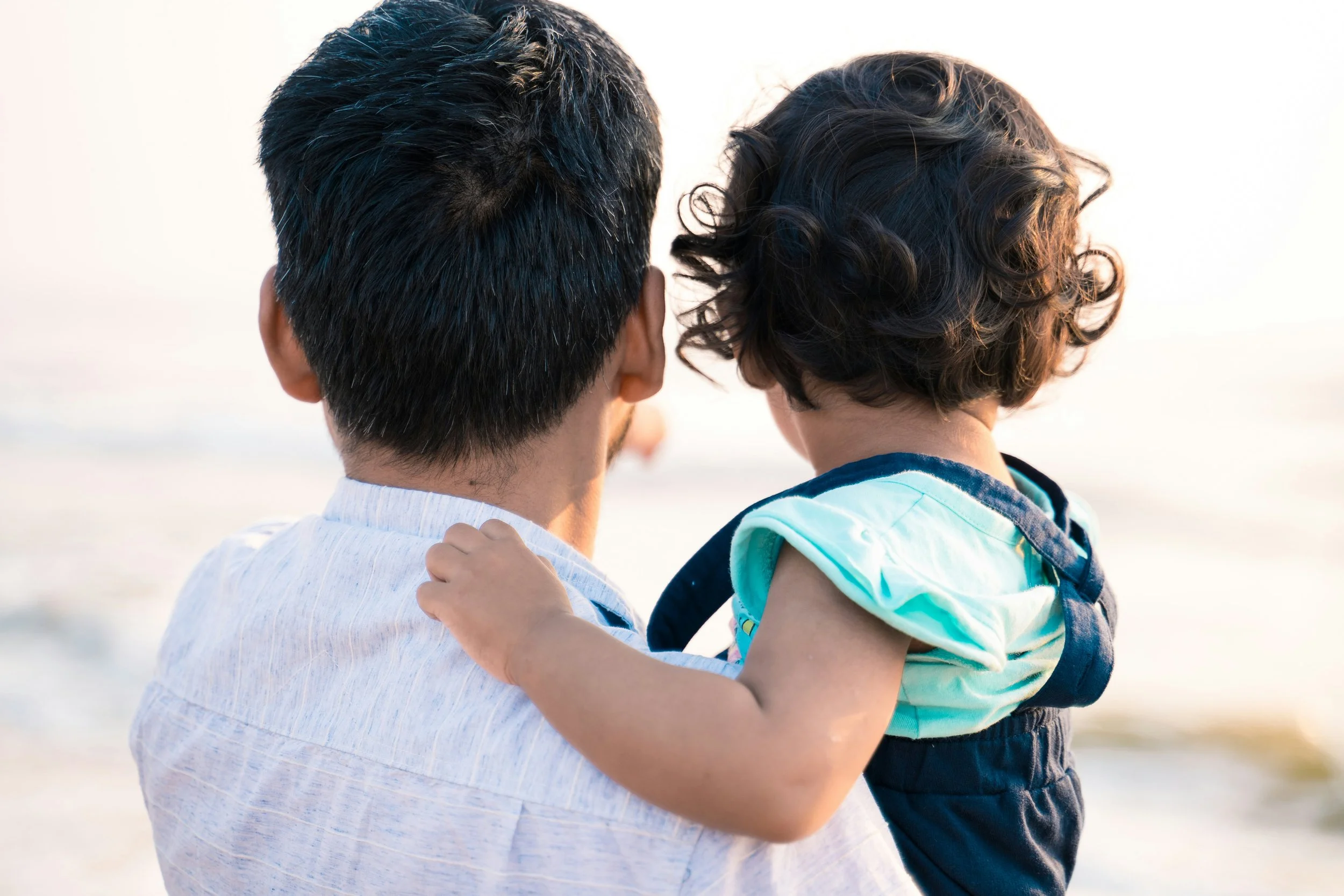
With regard to family, in many accounts the sense of “we” extended beyond a small nuclear unit to include a wider circle of relatives. More specifically, grandparents – especially grandmothers– played a major role in presenting an equilibrium between “I” and “we,” between caring for the collective and knowing the self. One student mentioned “I distinctly remember my grandparents and my great-grandmother especially, taking a lot of time to teach me one-on-one certain community values.” (Mexico)

This was echoed in another student’s comment, “I think the strongest forces shaping my sense of self and community were my grandparents and the women in my family. They were the ones who modeled what it meant to care for others, but also what it meant to be responsible for yourself.” (Taiwan) The awareness of interdependence seems to also emerge from the simple presence or geographical proximity of extended relatives. “I was raised by my grandparents, but my aunts were there, and my great-grandparents were close by. We were constantly exposed to other members of your extended family. That just made you understand that it’s not just you and your parents, but you’re part of an entire system of people that exist and are there.” (Mexico)

Beyond the relational environment in which these students were raised, for some, the memory of a “we” even included physical spaces: “Thinking of my early childhood, I remember a lot being connected with nature. My ‘we’ also included the outer space, the outer environment.” (Colombia) “When I say ‘we’ I think of myself and my collaborators, but I also think about the space we take up and the environment.” (Mexico)
“We over I”: Responsibility and Reputation

The sense of responsibility emerged as central but also double‑edged, depending on whether it included the perspective and desires of the child.

In many contexts, the “we” depicted a sense of responsibility for younger siblings and relatives when students told us how, "Older kids are to protect and take care of younger kids.” (Liberia) “[I] knew I had to be aware of my younger cousins, and kind of develop a sense of responsibility with that.” (Mexico) “As an older sibling, I would have the responsibility to take care of and watch the baby. If the baby cries, go get adults.” (Kenya)

In other instances, responsibility and community seemed to go beyond caring for others. The “I” in these cases was intended to benefit the version of “we” that is exposed to society and external judgment, where individual behavior isn’t judged as an isolated choice but rather as an expression of the collective–-contributing to a moral reputation. “You don’t make decisions just to benefit yourself; we want to elevate the name of the whole family. How can we each elevate family together?” (China) “People don’t want a bad member in the family,[they] want their names to be attached to be ‘good,’” (Ghana) One student raised the question, “How many ‘I’s’ are silenced when they don’t fit the ‘we’ that exists around them?” (Canada/ China) A closer reading of these statements suggests that these students had an awareness of the “I” and its intentions and desires. Even if behaviors were largely shaped by external expectations, students recognized the gap between personal inclination and those pressures, which necessitated controlling and adjusting the “I” to the accepted “we”.

In other accounts, there seemed to be less awareness of the “I,” and an unarticulated identity of the self perhaps indicating an overemphasis on the “we.” In such cases, the “I” appears to be fully built through socially prescribed patterns of conformity: “In Pakistan we– especially women– are brought up in a way that we're very people-pleasing. So there is no sense of I. When we think of ourselves, we think of our family first. My sense of “I” actually came much later when we moved to Germany.” (Pakistan) “In many ways, the “I” felt shaped by how others saw me rather than through introspection.” (China) “Teachers didn’t teach us how to promote ourselves as an ‘I’ –only as a “We have to do something,” or “We are” ... So it would be really hard to think by yourself.” (Taiwan) This reflects a tension between the need to fit in and the desire to stand out -–a tension pushed to its extreme when coupled with a competitive atmosphere.
“I or We”: A Singular “Good” and a Necessity of “Better”

Competitive classrooms were indeed mentioned as a setting where a tension arose between the need to conform and to distinguish oneself. “At school, conforming was the definition of a good child.“ (China) “This pressure to be distinct and distinguish yourself and be exceptional, to prove yourself...” (Canada) “We were curated together as a collective, though we also had to out-compete each other over limited resources — teachers’ attention, scholarships. When you walked onto the stage to receive the scholarship, you felt people’s gazes [...] It creates this dynamic: the “we” is together, but we are not actually together, because one day we’ll be competitors.” (China) These comments indicate a missed opportunity to create understandings of the “I” and “we”: “I didn't get to learn how to identify and name my emotions inside a classroom in Vietnam. I missed that piece in my really early education to really learn how to connect with myself.” (Vietnam) 

“I without We”: Migration and Loneliness

It was perhaps unsurprising yet still striking to hear how often the theme of loneliness surfaced. Students mentioned the prevalence of isolation when arriving in an American individually-oriented environment. They could only appreciate the texture of their original “we” after leaving it. “I grew up in a community where we used to have open doors. People came and went without a knock, never a bell, and without really saying anything. It taught me about being together. When I arrived in the U.S., I didn’t see open doors.” (India) “Moving here made me realize how lonely the United States could be, and how smaller your world can feel.” (Mexico)

Further Reflections

While we initiated these student gatherings with the intention of informing and expanding our research questions, we soon noticed they also led to cross-cultural discovery, genuine bonding, and self-reflection. Students commented that the lunches were “an incredible moment to learn about diverse experiences and perspectives from my fellows who come from so many different backgrounds and life experiences.” and “This kind of space is so hard to find in academia as it holds lots of nuances.” After our meeting, students shared their gratitude for being guided “to see the similarities and differences in different cultures and contexts.

These lunches remind us of something deceptively simple: there is demonstrable value in bringing together, around one table, people who would not necessarily sit together otherwise. This value tends to be overlooked in many university settings, where academic and social life often crystallizes around affinities —shared languages, regions, interests, or programs. By convening students from diverse cultural, linguistic, and socio-economic contexts, the gatherings created a space in which participants could speak about their early years to a group that could not assume a shared background. This setting helped each person to both recognize themselves and be productively puzzled by the stories of others.

We see this study as a small prototype for a practice that could be curated and continued in other educational settings. The conversations add another layer of insights about how dimensions of “I,” “we,” and “they” develop differently in varying cultural contexts. They provide rich examples of how social and cultural forces shape one’s place within a community, reminding us that individualistic and collectivistic behaviors involve nuanced understandings of the self and belonging. International students’ reflections on their upbringing through the lens of their recent experiences in the U.S. in particular help us to reconsider the affordances and constraints of moving within and between dimensions of “I” and “we”. Going forward, we hope to identify “educational pointers” that could be useful broadly, if not universally.

NOTES

The Good Starts Project is generously funded by the Saul Zaentz Charitable Foundation.

I would like to thank Howard Gardner and Mara Krechevsky for their valuable comments on an earlier draft.

Beyond the Self: How “We Thinking" is Cultivated in Japan

BY SHINRI FURUZAWA (first published January 22, 2025)

In individualist cultures such as the USA, “I” thinking often prevails. Values such as autonomy and independence, personal goals, and individual achievement are important. Recently, however, this emphasis on the individual and decline in the importance of community are recognized as problematic, as pointed out—for example—by Robert Putnam in Bowling Alone: The collapse and revival of American community. In collectivist cultures, interdependence and group harmony are important values and “we” thinking is more predominant. What are the mechanisms for how these different ways of thinking are imparted to young children? In this blog post, we explore the example of Japan.

How “we” values are encouraged in school

The importance of responsibility to the group, empathy for others, and group harmony is reflected and reinforced through Japanese education. The dynamics of this are explored in a recent documentary, Instruments of a Beating Heart.

Director, Emma Ryan Yamazaki, filmed a group of first-grade students at a Tokyo elementary school, focusing on the experiences of Ayame, a young girl who is perhaps a little more sensitive and requires more attention than her peers. The film’s dramatic arc follows the students as they form a school orchestra to play “Ode to Joy” at a school event. Both auditions and rehearsals are lessons in resilience. Students get only one audition attempt on an instrument. Ayame first tries out to play the drum, but fails and cries quietly at her desk. She succeeds in her next audition on the cymbal but struggles during the rigorous rehearsals. On one occasion, she is strictly reprimanded to the point of tears, making her too afraid to attend the next rehearsal. She has to be coaxed back by her class teacher. The students finally give their performance successfully and the music teacher praises them saying, “You’ve made us proud.”

Stepping back, we first see how empathy is valued as during the auditions all students are expected to cheer and be happy for those who were successful… but also be considerate to those who were not chosen. The music teacher tells them from the beginning that the most important lessons they should learn are perseverance and the joy of being useful to others. He also stresses the goal of group harmony telling students, “Make your hearts as one.” We see that good work ethic is vital as students are expected to practice diligently at home, and are praised when they choose to practice together outside rehearsal. The orchestra is a distillation of an interdependent society in which the success of the whole depends on the contribution of each individual. Ayame and her friends talk about the great pressure they feel, a pressure to succeed for themselves but also not to let down their classmates.

Japanese students cleaning their classroom

The film reveals how values such as empathy, group harmony, resilience, perseverance, and respect for authority, are instilled in children through the education system. This is reinforced not just in the classroom, but through daily routines. The film shows Ayame going about her normal responsibilities such as sweeping the classroom with her classmates, serving lunch, and greeting students at the school gate. Collective responsibilities begin young as schools usually do not have janitors; instead the students are responsible for taking care of their schools. These duties help children develop pride, responsibility and respect for the school, and the school community. There is a focus on collaboration, sharing responsibilities, and achieving group cohesion.

Of course, even in Japan, schools will differ from one another, but in general there are great differences between Western and East Asian acculturation. Professor Jin Li of Brown University argues that the purpose of education differs across cultural traditions.. Western cultures conceptualize learning as cultivating the mind and achieving insight; East Asian cultures conceptualize it as virtue-oriented, becoming a better person to achieve one’s potential in terms of Confucian ideals, such as harmony.

How “we” values are cultivated from birth: Communication style

In Japan, socialization to think of what’s best for the group over the individual actually begins long before school. There are differences in communication styles between mothers and children before language is even fully developed. Studies show that the Japanese train their children to be sensitive to the needs and desires of others to emphasize empathy; in the West, child-focused communication emphasizes individuality. While communication in the US is direct and explicit, Japanese communication style is indirect and implicit. For Japanese children, it is important to be a good listener and pay close attention to what others might mean implicitly. This contrasts with young American children who tend to ignore the speech of others in a society where being able to communicate effectively means being able to express oneself well. Japanese mothers also speak significantly less to their children than their Western counterparts, reflecting the virtue of silence. In a culture which values hierarchy and conformity, Japanese mothers also reinforce the hierarchical parent/child relationship, and the child's sense of belonging.

A surprising illustration of “we” thinking

Handmade leather randoseru weigh approx. 1.2 kg (2.6 pounds) and has 200 fittings.

With Japanese cultural values imparted from birth, children in Japan are remarkably sensitized to the feelings and desires of others. This is exemplified in an advertisement for backpacks known as randoseru. These backpacks have special cultural significance and almost all children are given one when they start elementary school, as explained in the New York Times article, “The book bag that binds Japanese society.” Randoseru are handmade from high quality leather and very expensive (between $100 to $500 USD).

The randoseru company described their ad as a documentary and it won the 2024 YouTube Works Award in the “Force for Good” category. It challenged the way parents think about their children. One reason for the ad’s success is the surprising reveals which provide drama. First, parents are interviewed and asked what kind of randoseru they would like their children to choose, or they think their children might choose. The parents are shown footage of their children as they enter a store and choose their randoseru. Mothers and fathers smile and watch with approval as their children carefully consider their choice of bag and choose styles and colors more or less as predicted. Viewers realize how well these parents know their children. The first surprise is then revealed.

The children had NOT been instructed to pick out the randoseru of their choice, rather they’d been asked to pick out the randoseru they thought their parents would want them to choose. We now understand the revelation was not how well the parents knew their children, but how well the children knew their parents. The children were then asked to re-enter the store and pick out the randoseru they really wanted. This reveals the second surprise.

In most cases, the children’s choices were different, even the complete opposite, from what their parents had predicted. In contrast to the carefully considered and thoughtful choices from the first round, the children run joyfully straight to their preferred bag. The parents are shocked and even tearful as they realize how mistaken they were about their children’s actual preferences.

Why were the parents not more aware of their own children’s wishes? This may be because the parents see themselves as guides who show how things should be done, for example choosing a bag color that won’t show the dirt. They also consider their children to be extensions of themselves and the family more than in the West. Children are closely linked or interconnected to their parents in terms of collective identity and social perception that parents encourage and instill. As children are a reflection of the parents’ efforts and values, parents are used to their children following and being attuned to their guidance as they have been trained.

The documentary has a happy ending. Reunited with their children in the store, parents let them know that they approve of their choices, including the father of a boy who chose a randoseru in pink. The documentary could be considered culturally subversive, as it showed the importance of respecting children as individuals and that children should not always be expected to consider the needs and wishes of others.

The importance of “I” within “we”

Encouraging empathy and sensitivity to the needs of others is one way to create social harmony and uphold collectivist values, however, it also leads to great pressure to conform. Conformity and suppression of the individual can lead to the impression that Japanese people are overly reserved or cautious. Individuals often feel they must suppress their true thoughts in order to avoid conflict because unanimity is valued, perhaps over-valued. The tension between what a Japanese person truly thinks and feels (known as “honne”) compared to what they feel obligated to support for the sake of harmony (“tatemae”), can lead to tremendous stress.

In Japan, constantly thinking of the thoughts and feelings of others and intuiting their wishes depends on a homogenous society that appreciates and conforms to the values of that society. But Japanese society is changing. As Japan reluctantly allows more immigration to meet the needs of a decreasing population, this trend will inevitably lead to some cultural challenges. The case of Japan may help other cultures reflect on what values they wish to instill in their young children and consider where the balance should lie between “I” and “we.”

We welcome your comments on your impression of the Japanese approach and how “I” and “we” values are instilled in your cultural context.


The Good Starts Project is generously funded by the Saul Zaentz Charitable Foundation.

I would like to thank Howard Gardner, Mara Krechevsky and Yvonne Liu-Constant for their valuable comments on an earlier draft.


REFERENCES

Clancy, P. M. (1987). The acquisition of communicative style in Japanese. In Language Socialization across Cultures (pp. 213–250). Cambridge University Press. https://doi.org/10.1017/CBO9780511620898.011

Fujita, N., & Hughes, C. (2021). Mind‐mindedness and self–other distinction: Contrasts between Japanese and British mothers’ speech samples. Social Development, 30(1), 57–72. https://doi.org/10.1111/sode.12454

Li, J. (2012). Cultural foundations of learning : East and West (1st ed.). Cambridge University Press.

Putnam, R. D. (1995). Bowling Alone: America’s Declining Social Capital. Journal of Democracy, 6(1), 65–78. https://doi.org/10.1353/jod.1995.0002


It Takes a Village to Raise a Good Child

By Yvonne Liu-Constant (first published october 15, 2024)

In August, 2024, U.S. Surgeon General Dr. Vivek Murthy issued Parents Under Pressure: The U.S. Surgeon General Advisory on the Mental Health and Well-Being of Parents declaring that parenting stress has escalated to a crisis level. Parents have always worried about their children’s health and safety as well as their family’s financial stability, so what makes their stress particularly high today? There are new challenges, such as managing technology and social media, a youth mental health epidemic, as well as heightened expectations to invest more time and money to ensure their children thrive in a competitive society. However, the core of the issue, as stated in The New York Times, may lie in

“the American belief that parenting is an individual task, not a societal one.”

The saying, “It takes a village to raise a child” stands in contrast to parenting as an individual pursuit. Although this saying, made famous in the US by Hillary Clinton’s book, is an indirect translation and combination of proverbs from several African languages, it nonetheless captures the shared value of raising children as a community. In a focus group discussion with students from different African countries at the Harvard Graduate School of Education, “it takes a village” came up frequently. They explained that child-rearing as a collective pursuit is rooted in a treasured cultural value: we are interconnected and interdependent with each other, the community, and the world. This sense of “I am because we are” is shared by various communities, known as Ubuntu in South Africa, Paluku in Liberia, Opiatoha in the Idoma language in Nigeria, among other languages.

The saying also comes from the cultural context of “the village.” It reflects and acknowledges close-knit communities where extended families live in the same compound, and grown children build houses near their parents. In the village—at least in the ideal—all adults take responsibility for all children in order to ensure they grow up to be good people. In Yoruba, there is the proverb, “A good name is better than riches.” Good names are attached to heritage, reputation, and value; adults work hard to teach children who are omo luabi—children with good character who represent the family well. 

Another frequently mentioned proverb (loosely translated) was, “Help me discipline my child.” Discipline can range from verbal reprimanding to physical punishment. While it may appear harsh, it comes from a place of concern and care. A student explained:

“The concept is a community-based concept in Nigeria. We believe that when I see your child outside, not from my family, going astray, it is my responsibility to tell that child: ‘What you are doing is very wrong’… When a child is misbehaving, we want you to correct that child. Your child is my child.”

While parents in the US often long for a village to help raise their children, the idea of neighbors disciplining their children is virtually unimaginable. One could attribute this to cultural differences—we don’t live in close-knit villages, consisting of extended families with shared values protecting the family reputation. However, there is a village that many of us do trust to help raise our children—the school. Saying that we “trust” schools might be an oversimplification, given the tensions present in various areas—for example, discipline affected by systemic racism. Although we can broadly agree on the importance of teaching children right from wrong, defining what constitutes a “good child” and who gets to decide that for our child raises complex questions.

What is a “good” child? How do different communities foster children’s developing sense of I, we, and they, so they grow up to be adults who uphold shared cultural values? Who are the people in our village, or the “we,” whom we trust to raise our children, and the “they,” whom we do not trust? These are some of the issues we are exploring at the Good Starts project.

One might argue that individualistic cultures lack a true sense of “village” where values are aligned, especially in today's sharply divided atmosphere in the U.S., where many school-related issues, from book selections to curriculum choices, have become highly politicized. Yet parents do try to create their own village when they can: they choose schools with a shared educational philosophy; connect with like-minded families through their children’s friends or playgroups; and may even relocate to be near grandparents or in neighborhoods where they feel a sense of belonging. We all need a village, whether it is the one we grew up in or one that we create—or recreate—for our children. Both individualistic and collectivistic cultures require a sense of “we”—a collective to support child-rearing. While boundaries may vary—such as preferences about who should discipline children or how schools handle misbehavior, we all rely on people outside our families to help care for our children.

What might a community with aligned values look like? What happens when parents, teachers, school leaders, and the government all agree about the crucial role that schools play in raising children? In China, the One Child policy (in place 1979-2015) created a shared national concern about the “Little Emperor Syndrome”: according to this characterization, the single child in each family is likely to grow up pampered by two parents and four grandparents, lacking opportunities to interact with siblings. Preschool was seen as the best—if not the only—place to socialize children and teach them how to be “good”—to share with peers, be independent and not rely on adults for all tasks, and respect others.

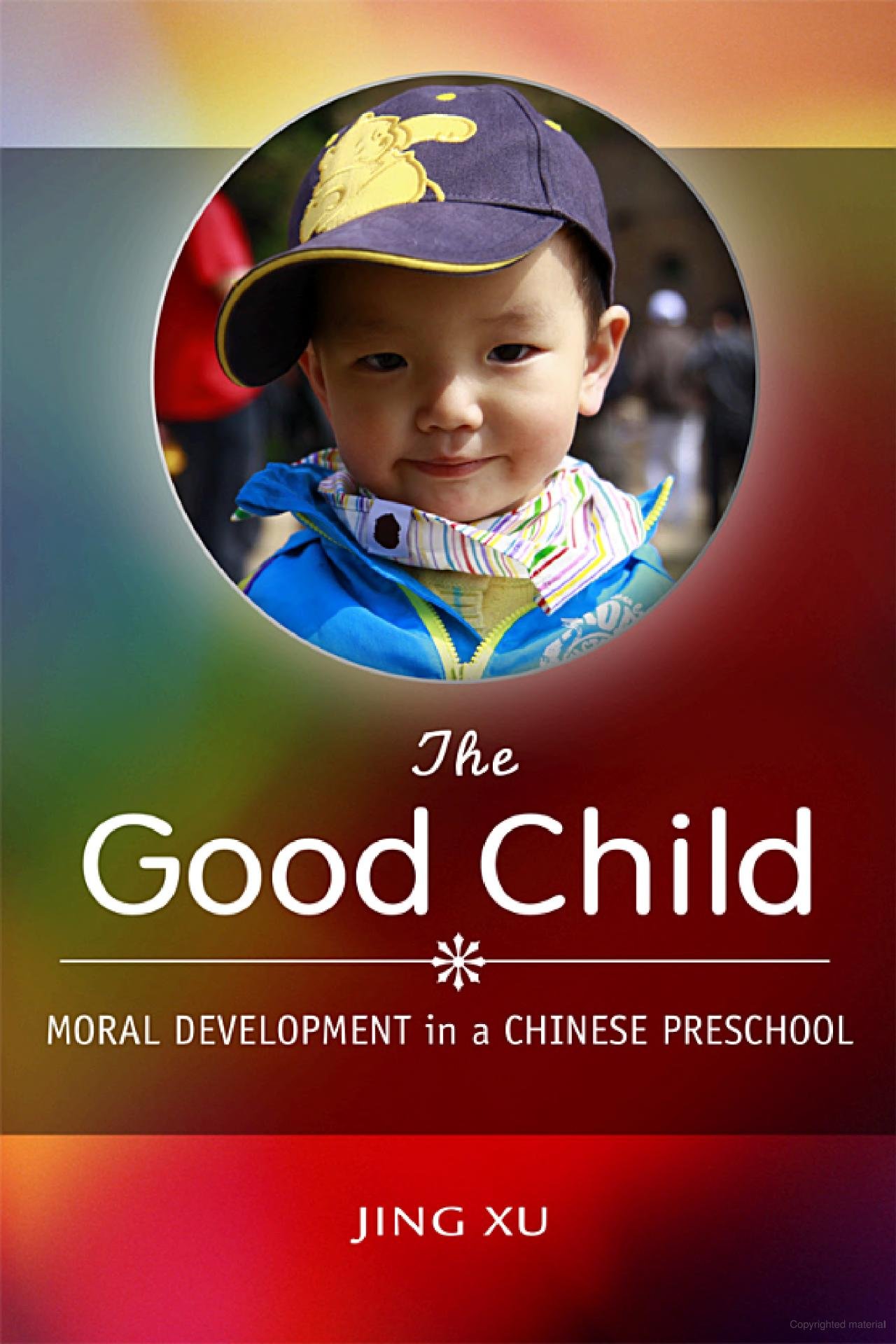
Jing Xu, professor of anthropology at the University of Washington, conducted an in-depth study at an early childhood center in Shanghai in 2011-2012. She detailed the findings in her book, The Good Child. Xu found that families and educators wanted children to learn to be good at school. But they encountered conflicting values between traditional Confucian ethics and the competitiveness in modern society. This tension led many persons—particularly parents employed in modern industries—to worry about children who are “too good,” or perhaps “too nice,” to thrive in the world. Teachers tended to disapprove of students who are “fake good”—doing the right thing solely for rewards, and preferred those who acted kindly in a genuine nature and authentically. These educators often associated students’ behaviors with their parents, concluding that insincere parenting produced insincere children. Meanwhile, adults themselves often engaged in disingenuous behaviors to gain advantages, such as parents giving teachers expensive gifts to secure prominent roles for their children in performances, thereby perpetuating the competitive culture and revealing the harsh realities of success in Shanghai. Even with a clear, shared goal of childrearing in a country supported by educational policy, how to raise good children collectively is complex when examined more closely.

It takes a village to raise a good child. As religious service attendance declines among many faith groups in the U.S., schools are one of the few remaining places with the potential to serve as a “village,” where educators and families form a community to teach and care for children. At the Good Starts project, we are launching a pilot study focused on schools with community building as their founding mission. What do various members of this village—children, families, teachers, and school leaders—think school is for? What do they consider to be a “good” child? How do they create a sense of community with diverse and sometimes conflicting family and school values? How do children develop their sense of “I,” “we,” and “they” within this village, and grow up to be “good”? 
As we research these questions at Good Starts, we would love to hear from you: Who are the people in your village? What does being a good child mean to you?

The Good Starts Project is generously funded by the Saul Zaentz Charitable Foundation.

I’d like to thank Vika Dotsenko, Wendy Fischman, Shinri Furuzawa, Howard Gardner, and Mara Krechevsky for their valuable comments on an earlier draft.

The Emergence and Evaluation of “They” 

© Howard Gardner  2024 (first published August 26, 2024)

 “They” or “Them” or “Those guys”

In the early 1950s, with his wife Carolyn and other colleagues, social psychologist Muzafer Sherif carried out an intriguing “real-life” experiment. It was an experiment, because he wanted to test a hypothesis in his area of expertise. It was “real life” because—in the days when “human subjects/studies committees” were not yet mandated—researchers were pretty much free to do what they wanted—so long as they did not violate their own ethical standards. (Stanley Milgram’s “obedience to authority” studies (1974) were the most famous—and notorious—example of the looser norms of that time.)

The Sherif team took over a summer camp for boys called “Robbers Cave” (1961). Upon their arrival, the 24 boys—all sharing similar social-economic backgrounds—drew straws. Thereafter they were placed in one of two gangs—the Eagles or the Rattlers. For several weeks, the teams competed very aggressively with one another in games and other challenges that yielded clear winners and losers. As the end of the camp season approached, most Rattlers could not abide most Eagles—and vice versa.

Since this was an experiment (and not preparation for a life in the military!), the Sherif team did not want campers to disperse while they still despised half of their peers. Accordingly, a few final “manipulations:” the group was posed challenges—or presented with superordinate goals—that could only be met if the Eagles and Rattlers were to join forces. Examples: fixing a truck that had broken down; repairing the water system; or extinguishing a fire. Even if there was lingering resistance to converting former “enemies” into “friends,” these restorative manipulations worked sufficiently well. By the time they packed their bags to return home, the campers were on reasonable terms with one another.

We live in a stressful time. Certainly, in the United States (note the name, which seems almost taunting) and likely as well in many other countries, there is an excessive focus—if not an obsession—with the “I.” Accordingly, along with many other scholars and commentators, our research group has been examining the factors—experimental manipulations or levers in “real life”—that might help to nudge the needle from “I” to “we.” Indeed, as I drafted this blog during the summer of 2024, political scientist Robert Putnam (2024) has yet again chronicled the damage to any society when so many of its citizens feel alone, isolated, and not part of a group.

To be sure, there’s a big difference between feeling lonely and isolated, on the one hand—that might yield a neutral “they”—as opposed to feeling clearly hostile to others—yielding instead an alien and despised “they.” In our investigations, it’s important to consider what it means to have or to create an “out group,” the costs attendant thereto, and the ways that the situation might be alleviated—or even dissolved.

Stepping back from the researcher’s clipboard, let me draw on my own experience. I endeavor to do so in a way that yields insight, rather than engenders discomfort. As someone raised as a reform Jew, but essentially areligious for decades, I was surprised—if not shocked—to discover that, as I reflected on this topic, the term “goy” readily popped up. As conventionally defined, “goy” simply means “not Jewish;” it can be used in a completely neutral way—like the term “visitor” might be used in contrast to the permanent residents of a town. And indeed, I think that for many, if not for most Jewish persons, “goy” or “goyim” does not contain much of an affective punch. (Note: I could well have thought of the term “gentile” instead of “goy” but I am trying to be faithful to my own thought processes.)

As described, the situation could well be different. Both within the Jewish community (however defined or delineated) and outside the Jewish community (in the contemporary United States, Jews account for fewer than 3 % of the population), the term “goy” can be considerably more loaded. For some Jews, it may mean “someone who is completely different from us and should be shunned,” or “someone who does not and will never understand our way of being.” And for some “goyim”—or, if you prefer, “gentiles,” —the concept of “not Jewish” can be used as a way of promoting one’s own (typically Christian) background and/or of disrespecting or disparaging anyone who harbors any “Jewish blood.”

No need to elaborate on this point—alas, it will be anathema to most readers. And of course, analogous conceptualization would likely exist even if there were no Jews. Whether “in group” vs “out group,” citizens vs interlopers or immigrants, or true-blooded vs aliens, the capacity of human beings to dislike, disdain, disparage, or simply “diss” others seems to be a basic–albeit not praiseworthy—trait, one easily incentivized and captured vividly by the Sherifs and their research team.

When does this begin? How does this begin? Need it begin? And if indeed it’s begun, how can it be defused, diffused, countered, or even ended? There’s significant literature on the creation and maintenance of “in groups” and “out groups.” While most of the literature deals with children of school age, the origins of such groupings can be discerned much earlier. Indeed, thanks to researchers like Yarrow Dunham, we know that within the first year or two of life, children already distinguish between members of their own racial/ethnic groups and those from visibly distinctive groups. There need not be any particular valence on this distinction—it can be difference without disdain—but there’s no question that it can be pushed (perhaps all too easily) into an in-group/out-group contrast or even clash.

Above, in introducing the notion of “we” vs “they” it was easy—and perhaps even natural— for me to think of religious groups. Dating back to Biblical times, and no doubt earlier, individuals aligned as Hebrews (Israelites) or as Philistines. And in subsequent eras, there are Christians vs Non-believers (agnostics, atheists), or—within Christianity—Catholics vs Protestants; and outside the faith, Christians vs Muslims or (within Islam) Sunnis vs Shiites.

But from a contemporary vantage point, religions are just one form of divider, one variety of “we” vs “they.” Individuals within our country divide along political lines (Democrat vs Republican), financial (wealthy vs getting-by vs poverty-stricken), and along racial lines, though there are many distinctions within and across sub-populations. A 900-page history of the Muslim World (Cook, 2024) chronicles numerous tensions and conflicts—as well as occasional cooperation— among subgroups of the followers and the descendants of the Prophet Muhammad (c. 570-632 AD).

In short, while our compelling interest has been in helping individuals move the needle from “I“ to “we” we cannot simply ignore the inevitable presence and the often powerful shadow of “they.”

Where can we begin to counteract these tendencies? A few words about our current enterprises:

Our Good Starts group has recently launched two prongs of research:

  1. With young children (roughly 3 to 6): we have created scenarios where these youngsters have the opportunity to show us, among other things, who they like to play with and why, and whether outgroups are distinguished (no “they”), whether outgroups are neutral (neutral “they”), or if the outgroup is to be excluded (negative “they”) and in what circumstances.

    To be schematic: Nothey”; Neutral “they”; Negativethey.”

  2. With adults having a stake in early childhood education—ranging from the parents of children enrolled in preschool, to the teachers and other personnel on campus, to the local administrators who set policy: We are posing analogous questions to the ones we are asking children and soliciting thoughts about the relationship between “I,” “we,” and “they” in different contexts.

At present this is clearly an academic undertaking—perhaps even an academic exercise. That said, the questions explored are important and timely. In a country, and indeed a world, where discrimination, intolerance, hatred, and even genocide are patent—and where the mediating or moderating forces are all too often feeble or evanescent—any effort to help all persons feel part of the same world, having similar stakes, and having an impetus to work together—has become absolutely crucial.

And it can’t start young enough!

The Good Starts Project is generously funded by the Saul Zaentz Charitable Foundation.

REFERENCES

Cook, M. (2024). A history of the Muslim world : from its origins to the dawn of modernity. Princeton University Press.

Dunham, Y., Baron, A. S., & Banaji, M. R. (2008). The development of implicit intergroup cognition. Trends in Cognitive Sciences, 12(7), 248–253. https://doi.org/10.1016/j.tics.2008.04.006

Milgram, S. (1974). Obedience to authority; an experimental view ([1st ed.]). Harper & Row.

Garcia-Navarro, L. (2024). Robert Putnam Knows Why You’re Lonely: The Interview. New York Times (Online).

University of Oklahoma. Institute of Group Relations, & Sherif, M. (1961). Intergroup conflict and cooperation: The Robbers Cave experiment (Vol. 10, pp. 150-198). Norman, OK: University Book Exchange.

“Your child’s education is not an individual pursuit.” Challenging Me before We in Early Childhood Classrooms

BY MARA KRECHEVSKY (first published August 5, 2024)

The world of early childhood education is filled with unhelpful dichotomies. For example, 

  • You are either talking about the group or the individual.

  • Learning is either teacher- or child-directed.

  • You are either supporting project-based learning or basic skills.

  • It’s either the learning process or the product that matters.

  • Teaching and learning are either cognitive or emotional endeavors

These dichotomies are not necessary, though many people may assume they are. Many school mission statements separate academic excellence and the ability to contribute to a democratic society into two distinct sets of expectations. Yet learning is an ongoing activity that begins at birth and continues over a lifetime. Current rhetoric about the importance of collaborative learning notwithstanding, most schools in the U.S. (and other individualist cultures) emphasize individual progress and achievement. In early childhood, a common curricular sequence begins with “all about me,” and then branches out to consider the family, classroom, school, and larger communities. In many ways, this sequence makes sense. Yet what would it mean to see the relationship between individual and group as mutually constitutive, so that from the very beginning of formal education, individual learning occurs with the world or community in mind?

Could schools become places where children are both supported in developing knowledge, skills, and understanding, and feel like they are contributing to something larger than themselves? When children and adults learn from and with each other, they become capable of understanding and accomplishing more than they would as individuals. In this view, children both advance their own knowledge and understanding and contribute to a more shared and public body of knowledge. They also learn how to learn from and with others—how to listen, how to build on and modify ideas, and how to negotiate disparate viewpoints.

Ron Berger of EL Education

The Good Starts Project is interested in supporting teachers of young children in creating communities of learners in their classrooms that embrace we as well as me. According to educator Ron Berger, schools make a mistake in thinking that children are necessarily oriented toward “me” or “we.” How do young children see themselves in relation to others? How do preschool and other early childhood settings shape adults’ and children’s perceptions of the relationship between the individual and the group? What do the cultural and political contexts contribute to the mix? We would like to help schools, from the very beginning, support the creation of communities of learners who see themselves as both independent and interdependent learners and members of a community.

We suspect there are at least four dimensions of the problem space:

1. What view of the child informs and shapes child-rearing and schooling?

Adult beliefs about children’s capacities shape how they interact with them. At one extreme, children are considered empty vessels to be filled with knowledge. Others see children as powerful, competent protagonists with the capacity and motivation to learn and understand the world around them. Jin Li, our colleague at Brown University, suggests that many individualist cultures tend to view the self as a stable entity with fixed attributes, whereas more collectivist cultures tend to see the self as relational and connected to others—in a constant process of becoming. (There is a saying, “In the West, if children don’t do well, they give up; in the East, they double their effort.”) If we see children as capable, strong, resourceful, and able and eager to learn from and with others, our approach to teaching and learning will reflect those beliefs and shape children’s sense of self and other.

2. What do children, teachers, families, and other stakeholders think learning looks like?

Is learning considered a private and individual activity, with children seen as independent discoverers and constructors of their own meanings, or a social and communicative act? In individualist cultures, educators often take an inherently group setting—school—and try to individualize it. Each child works on an individual product. Yet the types of activities, available materials, and time frame are often the same for all children. There is no collective goal, yet all individuals in the group are working[2] on the same things. Our PZ colleague, David Perkins, says learning is a consequence of thinking. If we also believe that thinking and learning are fundamentally social endeavors, children need the opportunity to build understanding, solve problems, and make meaning together.

3. What do children, teachers, families, and other stakeholders believe is the purpose of schooling?

Some months ago an educator who was starting a public charter school in Hawai’i told me that in her school, you would never hear the term “child-centered.” People might say “child-led” or “child-directed,” but not child-centered. To her and her colleagues, the center of education was not the child, but the land, the earth, and all living things. “Child-centered” is a common value in progressive education, particularly in early childhood. Yet the term is steeped in the Western culture of individualism, consumption, and capitalism. “Child-centered” implies education that is focused on the individual. What might an alternative look like?

In a civics and arts collaboration with the Columbus Museum of Art, teachers asked their students, “Why do you go to school?” Not a single student talked about the role of school in society. One high school student responded, “If the pandemic has taught me anything, it’s that school is not about education, but about government-sponsored babysitting.” This points to a need to better understand children’s beliefs about school and why societies (as well as individuals) might need schools.

4. What is the role of the teacher?

Loris Malaguzzi, founder of the Reggio Emilia approach to education

Many people continue to see teachers as deliverers—and children as receivers—of knowledge (the teachers teach and the children learn). In many US classrooms, teachers tell children what to do. Courtney Cazden, among others, has observed that group discussions in classrooms often look like a wheel in which the comments of children on the outer rim are directed toward the teacher at the center of the wheel, who then responds back to the individual child. Opportunities for children to learn from and with each other are scarce. Conflict is typically something to be avoided or resolved quickly.[3] However a different conception of the teacher’s role is possible. In the words of Loris Malaguzzi, the founder of the Reggio Emilia approach to early childhood education, “The aim of teaching is not to produce learning, but to produce the conditions for learning” (and we would add “…for learning from and with others).”

 It is time to challenge the idea that in focusing on the group as a context for learning, the individual somehow gets lost; rather, the group helps individuals find their identity in a more nuanced and multifaceted way. There is no need to choose between the two, just an ongoing need to design and revisit the balance of individual and group learning. From the first days of school (and earlier!), it behooves us to remember that learning is an expressive and communicative act where knowledge and culture are both created and transmitted.


The Good Starts Project is generously funded by the Saul Zaentz Charitable Foundation.

I’d like to thank Carin Aquiline, Wendy Fischman, Shinri Furuzawa, Howard Gardner, and Yvonne Liu-Constant for their valuable comments on an earlier draft.
 

[1]Your child’s education is not an individual pursuit.” This is a statement kindergarten teacher Melissa Tonachel used to share with parents at child-teacher-parent conferences.

[2] Note that getting work done is not necessarily the same thing as learning.

[3] One exception is the Opal School, a public charter school in Portland, OR, that was recently closed due to the pandemic. At Opal, conflict was embraced. Children engaged in playful inquiry with many low-stakes opportunities to explore ideas, make mistakes, and take risks (see, e.g., Do-Over, Making Friends with Conflict, and Snapping Ideas Together).