What’s “Fair” in Children’s Play? The Development of I, we, and they in Different Cultures

BY YVONNE LIU-CONSTANT (first published July 17, 2024)

Children all over the world play together, and more often than not, they fight over toys. What do adults do when conflicts arise, and how do they teach children to resolve them? How does the teaching and learning of conflict resolution shape young children’s understanding of themselves in relation to others in the group, and foster their sense of “I” “we”, and “they”?

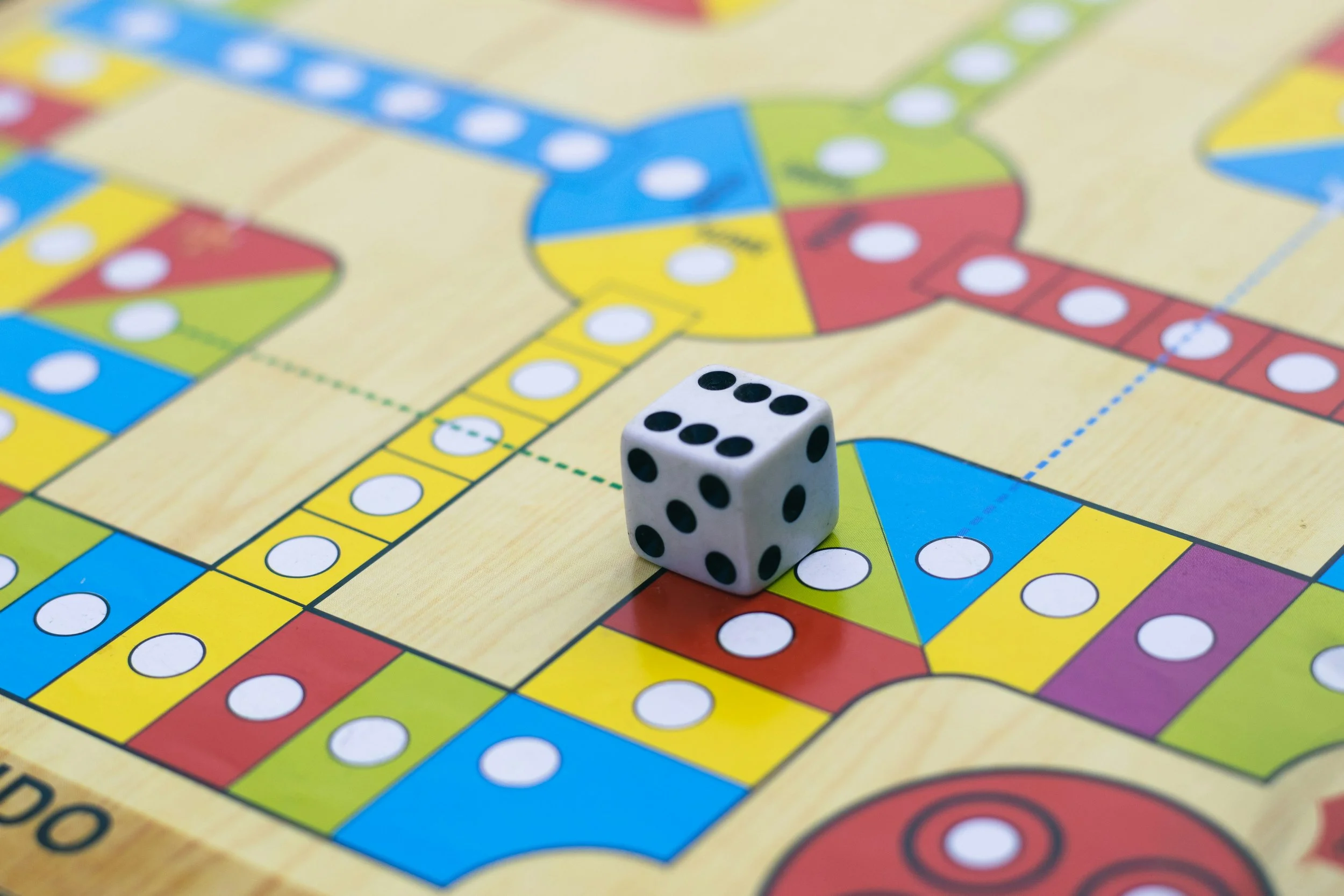
In early childhood classrooms in the US, children are typically encouraged to “share” and “be fair.” To resolve conflicts, adults teach children to talk and negotiate about ways to divide toys, take turns, or trade one preferred toy for another. The underlying value is that “fair” means “equal rights” – each individual child gets a say in how to share the toys equally.
Children's understanding of fairness evolves over time and is influenced by both cognitive development and sociocultural contexts. As children’s cognitive abilities develop, so does their moral reasoning. Piaget’s stages of moral development and Kohlberg’s stages of moral reasoning are the most widely recognized efforts to document how children’s understanding of rules and fairness becomes more sophisticated with age. The ability to take the perspective of others, which typically develops during the preschool years, is crucial for understanding fairness. Children who can better consider others’ feelings and viewpoints are more likely to act fairly. In other words, as young children develop beyond the “I” perspective into “you” and “we,” they are more capable of being fair. 

In addition, the way children perceive and practice fairness is significantly shaped by their interactions with parents, teachers, and peers, as well as by cultural norms. While fairness is valued in most, if not all, cultures, there are differences in what is considered “fair” based on cultural emphases of “I” and “we.” Individualistic cultures emphasize personal autonomy, individual rights, and self-reliance. Members of such cultures often prioritize personal goals over group goals and value independence and personal achievement. In the individualistic culture of the US, when conflicts arise during children’s play, adults help children negotiate fair shares that respect the equal rights of individuals.

In comparison, collectivistic cultures emphasize group harmony, family and community cohesion, and interdependence. Members of such cultures are more likely to prioritize group goals over personal goals and value cooperation and social relationships. At the Good Starts project, we have been consulting with people from different cultures in an effort to understand how children develop a sense of self in relation to others in groups. Here are three anecdotes about conflict resolution that offer cultural insights.

The older child yields to the younger

In China and Taiwan, the concept of 讓 rang or yield is the default strategy for conflict resolution. When children fight over toys at home, adults would typically say to the older child, “You’re older, you need to yield to the younger and let them have the toy.” According to Sing-ying Chung, an early childhood educator in Taiwan, the strategy of yielding is also commonly applied in mixed-age classrooms, where the teacher would further explain to older students, “You are the big sister and big brother in this class. You are more capable, so you are responsible for taking care of the little brothers and sisters.” 

Xin Xiang, a Harvard Graduate School of Education graduate, currently a faculty member at Beijing Normal University, shared an experience of her daughter who, as young as 2.5 years of age, could follow rules of turn-taking and sharing when adults around her share the expectation. However, when extended family members with more traditional values are around, her daughter learned to take advantage of being the youngest, grabbing toys without asking and expecting others to yield to her. These outcomes often counteracted Xin’s attempt to raise her child to negotiate for fair share and turn-taking.

Rang, or yielding, is rooted in Confucian philosophy. This long-surviving system of thought and action emphasizes that everyone occupies a specific role in the hierarchy, beginning with the family. Those in the lower ranks of the hierarchy (son/daughter, younger sibling, student, employee) respect the higher ranks (parent, older sibling, teacher, boss), while the higher ranks strive to be benevolent leaders (仁君 ren jun) and take care of those in the lower ranks. Being a big sibling is, developmentally, one’s first task in life of being benevolent, and yielding is taught as the strategy. The idea is: you were once the youngest and everyone yielded to you. Now that you are older and more capable, you have the responsibility to yield and take care of those who are younger. This is considered “fair” because the older care for the younger while the younger respect the older, and the harmonious “we” is more valued than the equal rights of “I.” The structure of the collective is maintained, where all the individuals behave according to their roles in the hierarchy based on benevolence.

The One Child Policy in China resulted in a generation without siblings, limiting opportunities for children to learn and practice yielding at home. To counteract these effects, early childhood educators in China have taken on the mission of teaching young children how to share and interact with peers, placing an emphasis on social development at school. The One Child Policy ended in 2015, and its long-term effects are still being observed.

One big bucket

Iris Ponte, an early childhood educator in the Boston area, shared an observation she made while conducting research at a Japanese preschool. The sandbox in the preschool’s playground was a popular spot to play, but the toys were a source of conflict. One boy in particular was often at the center of conflicts - he demanded the best toys and grabbed what he wanted from others. To help resolve the conflicts, the teachers offered more toys so that the children did not have to share, yet they continued to find new things to fight over. Observing the situation, a veteran teacher offered her advice, “One big bucket is what they need.”

The next morning in the sandbox, all the toys were put away except for one big bucket. As the children arrived, the boy who was usually the center of conflict immediately declared, “This bucket is mine!” He kept the bucket to himself and went to work, filling it with sand using his bare hands. Soon he realized he couldn’t do it alone, and so he asked other children for help. Before long, a group of children worked on filling the bucket together, and when they succeeded, they cheered! Then it came time to tip the bucket over. The boy exclaimed, “I will do it by myself!” yet he was not able to. Again, he had to ask other children for help, and when they succeeded in tipping over the heavy bucket together, they erupted into another big cheer!

By taking away all the toys and leaving only one big bucket, the thoughtful veteran teacher fostered a sense of group by creating a need for “we,” which helped each “I” find their purpose in the group effort. Fairness is not about each individual having an equal share, as the less experienced teachers tried to do by offering more toys, but about the group uniting under a superseding goal and forming a bond as a collective. 

What do you need the toy for?

The Opal School, a charter school in Portland, Oregon, collaborated with Project Zero on the Inspiring Agents of Change project. A goal of this work was to identify the learning conditions that support inventiveness in early childhood and primary schools. The project explored inventiveness in social-emotional as well as other realms of development. In a learning moment documented on video, a small group of young children were engaged in pretend play using pebbles, loose parts, and little plastic frogs at the water table. One of the children had fewer frogs than others and complained, “Not fair!”

As is typical in schools in the US, the children negotiated. What differed was the  response of the Opal School teacher – instead of guiding the children towards equal shares, she encouraged the child who complained to talk to his peers and ask: What do you need the frogs for? What are you planning to do? The questions got the children talking about their ideas for playing. When one of the children explained that he was planning to build an underwater playground for all the frogs, the children got excited! As they each pushed frogs into the middle of the water table, they happily collaborated on this new idea.

Here each “I” was respected, their ideas fully heard, eventually forming a “we” with a negotiated, shared purpose. Teaching practices like these created a culture in the Opal School that went against the grain of the mainstream, individualistic culture of the US, valuing the relationships built in the collective as well as the individual rights of children.

Conclusion

Children develop their sense of self in relation to others in a group in the contexts of their school and home cultures. The cultures we happen to have grown up in likely have an emphasis on individualism or collectivism, but the cultures we foster for children as educators and family members do not have to be limited as such. What can we learn from other cultures’ values on individuals, relationships, and groups?  How can we foster a new, inventive perspective of “I”, “we”, and “they” in young children, so that the  next generation can think, feel, and act beyond the “I”? These are some of the questions we ponder at the Good Starts project. We would love to learn about your experiences and ideas. Please comment below!

The Good Starts Project is generously funded by the Saul Zaentz Charitable Foundation.

Can we learn from "Old Enough"—a TV show that sends young children out alone?

By Shinri Furuzawa (first published June 21, 2024)

Audiences around the world have been charmed—but occasionally horrified—by the hit Netflix show, Old Enough. In this show from Japan, parents send children as young as two years old to complete various errands outside the home. These errands sometimes involve crossing busy traffic, walking distances of up to two miles, or taking a bus or ferry. The children, unbeknownst to them, carry hidden microphones which record their voiced thoughts. They are also trailed by a camera crew, disguised as passersby or workmen, to film them and ensure their safety.

In Japanese, the show translates to My First Errand

In every episode there is some dramatic tension as things inevitably go wrong. The children get scared; forget which items they are sent to buy; and/or can’t find what they’re looking for. A four-year-old girl in one episode takes so long completing her errand that the sun goes down and the production team has to light her way home. Presumably most members of the audience root for these very young children to complete their tasks successfully; indeed some viewers are moved to tears as the youngsters face and typically overcome various challenges.

Dangerous and irresponsible?

In the United States, a common reaction to the show is “That could never happen here, parents would be arrested!” It’s true that American police have been called on parents who allow their children out unaccompanied to play in the park, or walk the dog. Minority and low-income parents are particularly vulnerable to this intervention by the law. Fears about child safety, however, may well be  misplaced—the US is not a dangerous place for children, and abduction by a stranger, perhaps a parent’s greatest fear, is only 0.1% of FBI missing children cases.

That said, compared to many other developed societies, Japan is a safer country for children to roam. Urban planning means, for example, that residential streets are usually narrower with rare on-street parking. There are also fewer sidewalks. One might expect this geographical layout to be more dangerous, but actually in Japan cars are expected to watch out for and avoid pedestrians with the onus on drivers to be careful rather than the other way around. Mixed zoning also allows neighborhoods to include small businesses in residential areas—meaning children often don’t have far to go if they are sent to run errands. 

In comparison with the United States, which my colleagues and I consider to be a very egocentric (or “I-oriented”) society, Japan has a decidedly communal approach to childrearing. Indeed, “it takes a village,” with adults in the neighborhoods looking out for the local children. Contrary to expectation, Japanese cities can have closer communities than smaller towns as people live in greater proximity. Japanese parents are most likely to agree that they know people who would help their children if needed and this number rises in more urban communities.

The true goal of interdependence

Admirers of Old Enough see what these Japanese children are able to achieve; and many worry that children in their own countries don’t have enough autonomy or independence. But what Old Enough actually demonstrates is the Japanese value of interdependence. In this East Asian collectivist culture, the objective is not to achieve self-efficacy and achievement of personal goals. The aim is rather to nurture children to be responsive to the social needs and expectations of others while avoiding tension and conflict. Eminent social psychologists, Hazel Markus and Shinobu Kitayama, describe this as being “harmoniously connected to others.” The tasks assigned to children on Old Enough are tasks that will presumably help and benefit others—be it their family members or others in the community. The children are being asked to contribute and not just to benefit themselves. Sample errands include buying food for a sick sibling, picking up firewood for a cookout for friends and family, and delivering juice to thirsty fruit pickers. 

Boy aged 2 years 10 months, given candy before being sent on errand to dry cleaner (Originally broadcast by Fuji TV, 2017)

An example conveys this tension: In one episode, a two-year-old boy initially refuses to go out on his errand to pick up dry cleaning for his father, the owner of a sushi restaurant. His mother sternly tells him that his father will not be able to work if he doesn’t have his clean chef whites and they would have to close the restaurant if he can’t work. The responsibility of the family business is thus placed on the shoulders of the two-year-old son. Accordingly, for the benefit of his family, with a hug from his mother (and a treat in mouth), he sets off to the dry cleaner located about 60 yards away. He manages to do the errand and return home—though the dry-cleaning drags on the ground behind him as he is too small to lift it!

Children on the show generally feel a sense of duty to complete the tasks to help their family or community in some way. After successfully achieving their tasks, the children therefore feel proud of themselves and valued, they receive due praise and appreciation and are celebrated for their contribution. As an example, parents tell them that thanks to the groceries they brought home, dinner will taste more delicious.

The pattern I have described is not restricted to Japan. While visiting her family in Taiwan—an East Asian country with a similar collectivist culture to Japan—my colleague Yvonne Liu-Constant went to pick up her 3-year-old nephew, Joshua, from preschool. He was excited to see her (a cherished aunt visiting from America) and began running around everywhere. Suddenly, his teacher approached him and said something quietly. Joshua immediately went to his cubby and, to Yvonne’s surprise, returned with a well-organized backpack that he had neatly packed all by himself. Yvonne was impressed Joshua had managed this feat. His mother explained that all year, the children had been trained on how to organize their backpacks through step-by-step homework which built on skills to teach this responsibility. The reason? For children to be helpful to their parents. Increased independence and personal responsibility may be the result, but benefiting others is the supervening goal. 

AN Inspiring lesson

We may all have something to learn from this Japanese approach of encouraging children to think beyond themselves through errands or responsibilities which are acts of service. With proper guidance from caring adults and a supportive community, even very young children are capable of more than we might believe. Perhaps this Japanese TV show provides some insight on how we can all learn to think less about “me” and more about “we.”

The Good Starts Project is generously funded by the Saul Zaentz Charitable Foundation.

I’d like to thank Howard Gardner, Mara Krechevsky, and Yvonne Liu-Constant for their valuable comments on an earlier draft.

Why Should Ethicists Care about Pre-School Classes?

by Howard Gardner (first published November 30, 2022)

An Unexpected Focus

Why should we—researchers studying moral and ethical character in adolescents and young adults—be interested in how young children are treated as early as the pre-school years? To be sure: It’s been well established that the early years of life are critical for the healthy development of the individual. Accordingly, observations and findings about various approaches to early education may well be revealing.

A remarkable set of studies, carried out over the last forty years, has illuminated three distinctive approaches to early childhood education. In the early 1980s, educational anthropologist Joseph Tobin and his colleagues examined preschool education in Japan, China, and the United States. Two decades later, members of the research team returned to the same sites; they documented both continuities and changes in the trio of settings, sometimes with the same teachers. And then, yet again, during the most recent decade, the research team, now led by Tobin’s former student Akiko Hayashi, returned to the sites that had been earlier studied—this time focusing particularly on the way that teachers and teaching had changed over the decades.

The methods employed by the researchers were original and turned out to be surprisingly revealing. In addition to ethnographic observations and semi-structured interviews, the team created short videos of classrooms in-operation in the three societies. Thereafter, they showed these videos to educators across the three cultures and gathered their observations, analyses, and critiques. This multi-faceted approach elicited reflections on pedagogical approaches in the teachers’ own society, as well as observations and critiques by observers drawn from the other two societies.

It hardly needs to be stated: with four books on the shelf, as well as numerous articles, presentations and symposia, one could create a lengthy summary—and still leave out much of importance. For present purposes, I have a single focus: how educators across the three societies handle conflict in the preschool class. The distinctive approaches reveal much about how adults—and particularly educators—conceptualize conflict; and these conceptualizations, in turn, may provide clues to, hints of, the moral and ethical landscape of the respective societies.

An Episode, Response by Teachers, and Diverse Interpretations across the Three Societies

At the Komatsudani preschool on the east side of Kyoto, four old Hiroki is misbehaving. He is hitting other children, hoarding toys, disrupting organized activities—and over the course of the day, his demeanor actually gets worse.

What happens in the Japanese classroom? Ostensibly, very little. The teachers stay largely in the background, wait for Hiroki to calm down, even ignore some attacks that might have mildly injured other children. The day finally ends at 6 PM when Hiroki’s father picks him up.

Watching the video, most Japanese educators find this an acceptable reaction. They believe that no serious injury is likely to occur. The students will learn about how to handle challenging situations as they seek to control or modulate Hiroki themselves—rather than relying on adult interventions; Hiroki will learn that little is to be gained by this anti-social behavior. Instead, he will be motivated to become an accepted member of the cohort… and this feeling of belonging is central to Japanese culture.

Not so for educators in the other societies who view a video of the episode. Most do not approve! They think that the teachers (knowledgeable and responsible authority figures) can and should intervene. The misbehaving child deserves it; he will draw an appropriate lesson from this adult intervention; the children who are being mistreated deserve to be protected and rescued. Indeed, in their passivity, the teachers may well be derelict. Moreover, the other students are absorbing the wrong message: misbehavior is to be tolerated–perhaps event tacitly encouraged–by authority figures.

To be sure: not every observer reflects this attitude. Certainly, some Japanese educators feel that the teachers are not fulfilling their educational roles appropriately; the adults in the room should directly address this anti-social behavior. And observers from the other societies also vary in the extent to which they critique teachers, though few would have permitted such disruptive and possible injurious behavior to proceed unchallenged for so long.

Follow-up

Societies are not static! China has gone through several changes—the mid-1980s and early 2000s were more permissive than earlier or more recent periods. The establishment of academic standards has become widely accepted, though the pendulum continually swings between progressive and conservative orientations. The United States has moved in the direction of greater accountability, including a focus on numeracy, literacy, and pre-literacy skills. Japan has more for-profit schools and has sought to incorporate lessons from other societies, such as the admired pre-schools of Northern Italy.

Still there seem to be some throughlines, some continuities:

In Japan, classes remain large—as many as 30 students for one teacher. (And some see advantages in classrooms of this size—students are more likely to realize that adults are not necessarily available to intervene). Teachers tend to remain in their previous niches or to take on more authority within their designated school. The “Three Rs” are not salient.

In China, the acquisition of study and work habits should start early. Individual differences in achievement are to be expected and should be acknowledged; but so is membership in the group, ranging from the class, to the school, to the wider Chinese society.

In the United States, schools are expected to engender independence, autonomy, and individuality. This characterization obtains for teachers as well—many continue to pursue their own education, typically at their own expense, and often will end up in different schools, in different roles, or even in a different occupation.

Stepping Back

What are we to make of all this? On the one hand, I’ve described but a single line of research—a few schools, for very young children. In most societies around the globe, including the three observed by the Tobin team, youngsters will have many additional years of schooling as well as decades of work and family life ahead of them. All of these experiences are likely to have an impact. Moreover, I’ve focused on only one classroom interaction—and others (for example, how teachers deal with events and encounters that occur in the school playground or in the neighborhood)—will doubtless have impact as well.

On the other hand, as scholars of education (as well as psychology and neuroscience), we have now accrued massive evidence of the importance of the early years of life. The brain develops (or fails to develop) in crucial ways. Social and emotional models are being observed, absorbed, emulated, (or, on occasion, rejected); and so have skills and attitudes toward work as well as play. To be sure, not everything is determined by the age of five,—nor (to riff off a once well-known book title) has all been learned by kindergarten (!) –but a great deal has been.

The traces laid down in early life can be overthrown if society changes radically; or if the preschools (or, for that matter, education at home) undergo a major reformulation and reconceptualization. But it’s naïve to think that moral and ethical standards can simply be flown in or imposed at the age of 10, 20, or later. A basis—what Germans term “anlage” —has been well established; —and if it remains or is reinforced in the succeeding decades, the results are powerful and enduring traits, behaviors, personalities. These cannot be easily changed! And so, as just one example, believing that one is part of a group, and should not assert one’s individuality too much, is far more characteristic of Japanese than American youth…hence the much-cited Image of Japan as a ‘shame’ rather than a ‘guilt’ culture.

Moreover, these patterns of thought and behavior in turn have an impact on the societies that struggle for dominance in our world. In 1945 the United States presumed as Number One; in 1980 Japan described as Number One (Vogel, 1979) and in our time, China asserting itself as Number One.

In future writings, my colleagues and I will focus on the ways in which schools around the world contribute to the ethical standards and mooring of the broader society.

The Good Starts Project is generously funded by the Saul Zaentz Charitable Foundation.

For comments on earlier drafts, I thank researchers, Joseph Tobin and Akiko Hayashi, and also my colleagues, Lynn Barendsen and Shinri Furuzawa.

REFERENCES

Fulghum, R. (1989). Everything I ever really needed to know I learned in Kindergarten. Ballantine Books.

Hayashi, A. (2022). Teaching expertise in three countries: Japan, China, and the United States. University of Chicago Press.

Tobin, J., & Hayashi, A. (2015). Teaching Embodied: Cultural Practices in Japanese Preschools. University of Chicago Press.

Tobin, J. J., Hsueh, Y., & Karasawa, M. (2009). Preschool in three cultures revisited: China, Japan, and the United States. University Of Chicago Press.

Tobin, J., Wu, D., & Davidson, D. (1989). Preschool in three Cultures: Japan, China, and the United States. Yale University Press.