


ON GOOD LEADERSHIP: REFLECTIONS ON LEADING MINDS AFTER 25 YEARS

by Howard Gardner

Once I had begun to write about the varieties of human intelligence (Gardner, 1983/2011), people frequently asked me about the intelligences that leaders have—as well as the ones that leaders lack or do not need. As I pondered this question—which I’ll return to below—I formulated ideas about how leaders function, what makes for an effective leader, which leaders I have admired and why. As a lifelong citizen of a democratic society, it seemed natural for me to focus on voluntary leaders—people who are able to get, to persuade, to inspire others to think and act differently without forcing them to do so.

In Leading Minds (Gardner, 1995/2011) I portrayed 11 leaders whom I admired—ranging from university presidents, to military leaders, to individuals who—despite lacking an ascribed platform—succeeded in changing the minds and behaviors of many individuals. According to the cognitive view that I proposed in that book, leadership takes place as an exchange between minds. The powerful vehicles that leaders wield are not tangible weapons—they are stories. Leaders create stories—and they embody these stories in the lives that they lead. These “lives of saints” (and of “sinners”) are “existence proofs” so to speak. The evocative stories told and exemplified by effective leaders affect people; and, in turn, the people come to behave and act differently as a result of encountering the stories.

Today, I still believe this account in general. But events of the past 25 years have given me considerable pause.

By 2010, some wrinkles or challenges to my account were already becoming clear. In an edition of Leading Minds published the following year, in a section called “Leadership in the era of truthiness, twaddle, and twitter”, I reflected:

No leader today can afford to ignore this powerful trio: The ease of promulgating false statements; the detritus that permeates the blogosphere; and the prominence of the ad line and the gag line. Indeed the challenge to the leader is to counter these forces when they are inimical to his or her goals and to put forth a powerful counter-story that highlights truth against truthiness, clarity against twaddle, and a developed and substantiated story as opposed to a twitter-length teaser. As I write these lines, US president Barack Obama clearly understands these challenges; but it is uncertain whether he—or, indeed any thoughtful leader capable of complex thought—can be heard and understood above the din. (Gardner 2011, p. xii)

Of course the threats to authentic stories, compellingly told, and actually “lived” have been exemplified by the persona and behavior of President Donald Trump. But I don’t want to focus unduly on Trump because we hear similar contrived stories, and encounter analogous faux embodiments around the world—consider the words and actions of contemporary leaders—Bolsonaro (Brazil), Duterte (Philippines), Orban (Hungary), Erdogan (Turkey), Xi (China), Putin (Russia)… and the list could be easily extended.

Nor are these threats limited to the early twenty-first century. My cautionary words of 2010-2011 could (and perhaps should) have been applicable in the 1930s—in the years leading up to World War II—and no doubt in earlier eras as well. It has long been tempting for leaders to create powerful myths—posing as heroic loners, arrayed against the forces of evil—and to persuade an impressively sizable cohort of followers that what they say is true and that, as a consequence, their edicts should be followed. (Niccolo Machiavelli would not have been surprised). And as I pointed out in Leading Minds, a simple or even simplistic story all too often prevails over one that may be more accurate and more appropriate and more truthful, but also more complex.

 An Approach to Good Leadership

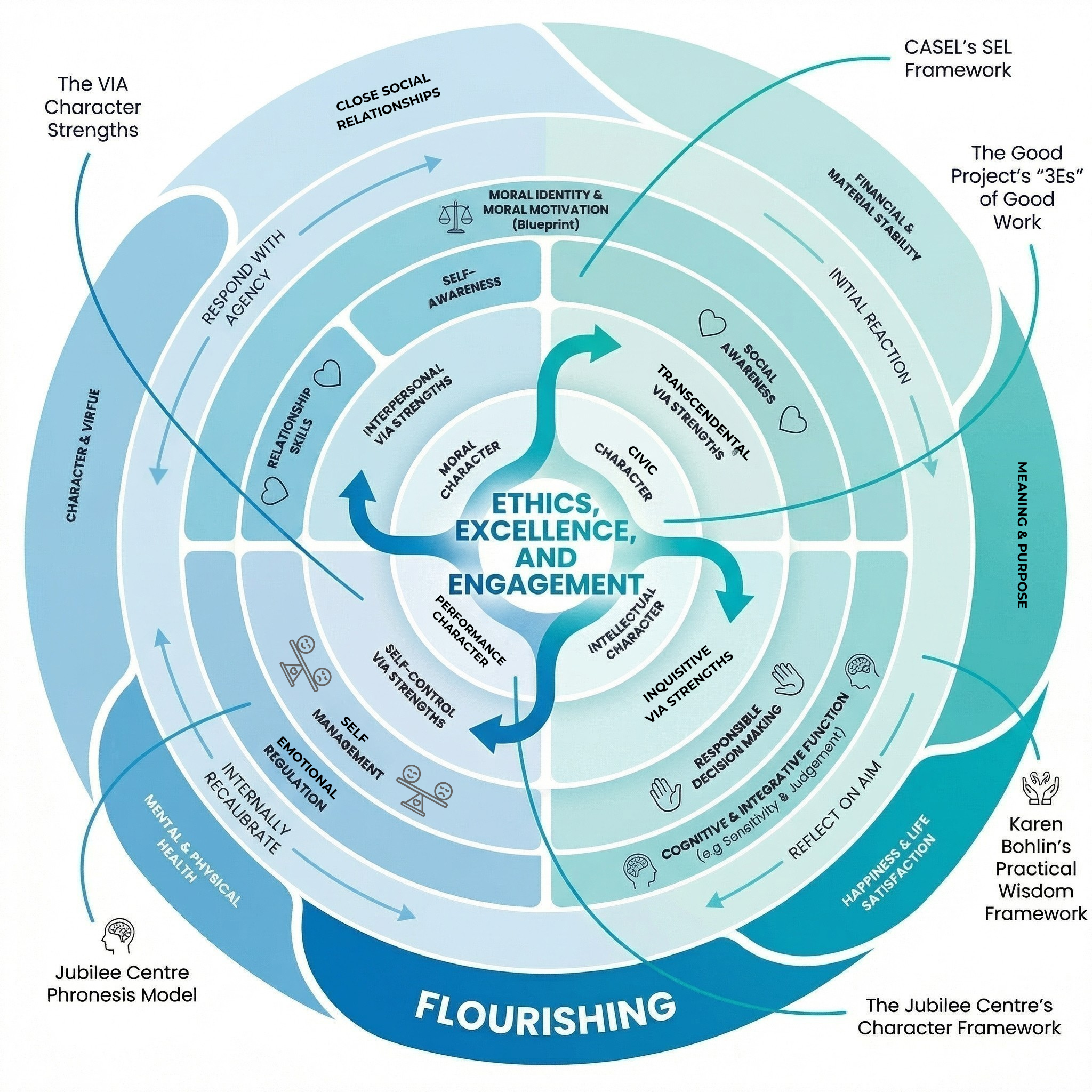
In recent years, as part of what we call The Good Project (thegoodproject.org), my colleagues and I have shifted our focus from what makes for an effective leader to what makes for a good leader. And in this line of research, we have identified the three key features of a good leader:

Excellence: The good leader knows the field in which he occupies an influential role, keeps up with developments, and draws on his knowledge appropriately.

Engagement: The good leader cares about her work, finds it meaningful, looks forward to carrying it out effectively even at times when conditions are not favorable.

Ethics: The good leader ponders the ethical implication of contemplated words and actions, strives to do the right thing, reflects on consequences, and seeks to do better the next time.

It’s not always easy to determine whether someone is a good leader. With respect to excellence, many leaders rely on previous knowledge and/or do not know how to proceed when conditions change significantly. With respect to engagement, one may well be deeply engaged in carrying out work that is compromised or even malevolent (see Shakespeare’s histories and tragedies).

My colleagues and I have been particularly concerned with the ethical dimension. In almost any position of leadership, there are certain well-established norms and rules which can and should be followed. In following such norms, one does not need to exercise one’s ethical muscles. 

The “ethical test” occurs when challenges arise for which the standard procedures are not adequate or appropriate, and when the leader recognizes this conundrum. I’ve termed this recognition the ethical “A-ha.” Indeed, if you don’t recognize and then attempt to deal with the new situation, there is no possibility of an “A-ha” nor, accordingly, for pursuing a better course of actions. 

In such challenging situations, leaders need to reflect on intentions or motives, the means at their disposal, and the necessity of dealing with the consequences of the actions that they undertake or choose deliberately not to undertake (Nye, 2020). Accordingly, we judge the “goodness” of leaders in terms of recognition, action, consequences, and lessons learned. And of course, the cycle continues throughout the tenure of the leader.

Here’s  a rough metric that one can apply in an evaluation of whether leaders qualify as good leaders:

  1. They seek to determine the truth and tell the truth; and when they have made errors, they admit it and try to make amends.

  2. They recognize the existing norms and abide by them, or are willing to challenge them openly and bear the consequences (which might entail civil disobedience).

  3. When the norms are not adequate, or new issues arise, they publicly acknowledge this situation—I call this awareness The ethical “A-ha”.

  4. They articulate and ponder the dilemma—they don’t claim to have all the answers.

  5. They search for the best input—expert and political—including advice from a “team of rivals’’.

  6. They make a decision openly, anticipate the consequences, are poised to change course as necessary, and to revisit the consequences of actions taken or not taken.

  7. They indicate their willingness to repeat this cycle and, ultimately, help to bring about a new or revised norm of ethical awareness and reflectiveness with respect to the conditions with which they have been dealing.

A Word on Intelligences

As mentioned, once I began to carry out scholarly work on leadership, I was asked about the kinds of intelligences that leaders had. I formulated an answer to this question: Leaders need linguistic intelligence, because they are essentially story tellers; and they need interpersonal intelligence, because they have  to put themselves in the place of audience members or followers and appeal to their better angels. It is helpful as well if they have intrapersonal intelligence—though, as illustrated by the case of President Ronald Reagan, one can be an effective leader even if one has little inclination toward introspection. Other intelligences (musical, spatial, etc.) are fine, but they are optional.

When asked about Donald Trump’s intelligences, I was initially stumped—because he has modest gifts in language (several commentators have suggested that he is dyslexic, and his vocabulary seems to be quite limited); and clearly he has not an inkling of intrapersonal intelligence. This is not a new story at all—the long-standing saga of populism in the US.

Perhaps we should postulate a new intelligence—media intelligence. Because even if one wants to castigate Trump, one must concede that he mastered the medium of television via his long-running show The Apprentice and has used Twitter in a way which is astoundingly successful (Trump 2020). Media intelligence might be a form or strand of interpersonal intelligence, but one entirely devoid of empathy or of understanding of particular individuals (as contrasted with an appreciation of “the crowd”). And indeed, in the past, successful leaders have displayed mastery of the new media—Franklin Roosevelt (and, alas Adolf Hitler) with respect to radio, John F Kennedy with respect to television, Ronald Reagan with respect to movies, and so on.

It’s also been suggested that Trump has the ability to read the “spirit of the times”, a more significant achievement. That may be so. On the other hand, it’s equally possible that he has long had a litany of complaints and proposals over the decades and—for reasons unconnected to his persona—the spirit of the time intersected with his program.

Concluding Note

My goal in this essay is not to denigrate Trump or to raise other leaders to a higher status. Rather, I have sought to revisit my initial conception of leadership. Specifically, I have emphasized the need to take into account a fast-changing landscape; and the pressures to master the most popular media of communication. Also, I no longer take for granted a democratic society with clear standards of right and wrong and with a faith in the importance of the truth. Rather I have focused on what it means to be a good leader and on the properties and processes that a good leader needs when faced with challenging dilemmas. In a phrase, we don’t need more leaders—we need better ones; and we need to help those with leadership potential to deploy their gifts in pro-social ways. 

 ©Howard Gardner 2020

References

Gardner, H. (1983/2011). Frames of mind: The theory of multiple intelligences. New York: Basic Books.

Gardner, H. (1993) 1993). Creating Minds. New York: Basic Books.

Gardner. H (1995/ 2011). Leading Minds. New York: Basic Books.

Gardner, H. (2011). Truth, Beauty and Goodness Reframed. New York: Basic Books.

Gardner H. Ed. (2010). Good Work; Theory and Practice. Available at: https://static1.squarespace.com/static/5c5b569c01232cccdc227b9c/t/5e7e1b520a5e5d2a3e0677fc/1585322850147/GoodWork-Theory_and_Practice-with_covers.pdf

Nye, J. (2020). Do Morals Matter? New York: Oxford University Press.

Trump, M. (2020). Too Much and Never Enough. New York: Simon and Schuster.

Encouraging College Students’ Responsibility During the Pandemic

by Shelby Clark

A few weeks ago, The Good Project researcher Kirsten McHugh wrote about “Parents as Educators: A Good Work Perspective”. But what about the other side of the story--the students? What does it mean for students to be good workers during a pandemic?

As college campuses have become the new “hot spot” for COVID-19 outbreaks, this question has become even more important. College students consistently encounter ethical dilemmas, but the pandemic has thrust new ethical dilemmas upon them, such as whether to “snitch” on fellow classmates holding gatherings, or even large parties where numerous people might become infected. Because of COVID-19 we are now asking young adults to think more and more beyond their own needs, and to be responsible as well to others in their community and society; yet, we know from past research that youth often have difficulty with such “beyond the self” thinking. With COVID-19 constantly throwing new dilemmas in young people’s ways, how can we as educators and adults help our students to think about their responsibilities to self and others during the pandemic? 

When trying to help youth handle ethical dilemmas, it is helpful to use a tool such as The Good Project’s Rings of Responsibility. This tool was originally designed to help individuals think about to whom or what they are responsible in their work. The rings of responsibility are five concentric circles that begin with responsibility to oneself, and then expand to wider and wider areas of responsibility. The second ring represents responsibility to others, like family, peers, and friends; the third ring represents responsibility to community, such as one’s school or neighborhood; the fourth ring represents responsibility to one’s profession, which, for students, indicates commitment to being a student and the rules and norms of being a student; and the fifth ring represents responsibility to the wider world or to society as a whole (see image). 

Let’s take the example of whether a student should “snitch” on their classmate’s unallowed party on a college campus in the age of COVID-19. Below, I consider how I might reflect on my own responsibilities if I were a student in such a situation. 

  • Self: I would most likely feel guilty if I did not inform on my classmates. As such, “snitching” would be a way to ease my guilt and by doing so act responsibly towards myself.

  • Others: Perhaps the classmate holding the party is a close friend; if so, I would think that my responsibility to “others'' would be to not tell on the friend in order to save my friendship. 

  • Community: On the one hand, I can see that being responsible towards my community means informing on the party; in doing so I can protect the public health of other students on the college campus. On the other hand, I’ve seen as a researcher that when students are expelled for misbehavior, it can create stark divisions on campuses that lead to mistrust amongst the student body--it may therefore be better for the community’s mental well-being that I keep silent after all.  

  • Profession: Are there codes of conduct for the students at their university regarding these parties? If so, informing an authority is likely the correct thing to do according to the student code of conduct. I would also need to consider whether doing so would promote or hinder student learning at the university, which is, ultimately, the “point” of higher education. 

  • Wider World: In light of the ripple effect seen from a variety of parties held during the pandemic, it seems likely that informing on a classmate’s party could save lives. 

Ultimately, the choice becomes whether I would not inform on the hypothetical campus party and potentially save a friendship and campus dynamics, or whether I would “snitch” and uphold the college community’s public health, the student code of conduct, societal public health, and ease my own guilt. For me, as an adult, the choice is clear: the outer rings of responsibility should come first, and I would inform on the party. However, for youth the choice is often not as transparent. 

Given that youth often have difficulty thinking beyond their own self-interest, it is more important than ever that adults and educational institutions continue to find ways to help young people to think about, and make decisions in light of, their broader impacts on society. Certainly, considering the rings of responsibility doesn’t give a student the answer of what to do in a difficult situation. In fact, students might feel that it pits their responsibilities against one another--what’s good for them versus what’s good for others. Ultimately, though, it should help a student consider the pros and cons of a situation, and how they might weigh their various responsibilities to self and others when things become difficult. We know the pandemic will continue to throw new ethical challenges in the way of our students; as such, let’s give students the skills needed to become the socially responsible adults the world needs.

Announcing: New Research Paper

We are excited to announce that we have added a new research paper to our collection:

Professions in the Age of Information Technologies and Artificial Intelligences:

The Case of Medicine, Law and Education in China by Xin Xiang

This paper, by Xin Xiang, examines “the possible futures of the professions in China: Will the Chinese professions be able to leapfrog over the professionalism stage and become global leaders in the age of information technologies and artificial intelligences, or will they be crippled by the under-development of professionalism throughout the 20th century?"

To read the paper, visit our publications page or click here.

Visiting (or Revisiting) Solidarity

by Lynn Barendsen

I recently had the opportunity to participate in a conference dedicated to Service Learning.  The 23rd International Service Learning Conference was hosted by CLAYSS, the Latin American Center for Service Learning.  My fellow panelists and I addressed “The Importance of Educating in and for Solidarity.”

Prior to this plenary, I had not given much thought to the idea of solidarity.  In my North American mind, the word has vague political connotations, usually associated with unions, demonstrations and the movement in Poland started by Lech Walesa.  In preparation for our conversation, I unpacked the definition, which (according to Webster) is in fact about unity -- based on shared interests or objectives.  Not necessarily political at all (acknowledging of course that these days everything can be political),  the notion of  “solidarity” is in fact connected to three concepts that are central to good work and the Good Project:  alignment (or misalignment); responsibility; and meaning in work.   In this blog, I revisit the concept of solidarity as it’s been informed by conversation and reflection.

During the course of our time together, my fellow panelists and I touched on a number of ideas.  

  • Joseph Puig, who studies Moral Education at Barcelona University, stressed that educating for solidarity is urgent.  As he describes it, we are confronting a series of crises: climate crisis, the excess of inequalities, attacks on democracies, COVID 19.  We have to find a way to collaborate because none of these crises will be solved with individual solutions.

    • On the Good Project, we often talk about alignment and misalignment.  Alignment happens when all of the various groups or relevant parties involved want the same things, or work towards a common goal.  Take just one of the crises outlined above:  it seems plausible to imagine that we all hope to end COVID 19.  However, how we make that happen, especially in the US, is not something we can agree upon.  We are horribly misaligned, and efforts to collaborate seem increasingly stalled.  Some states have had much more success than others, and yet the solutions that work in one state are not necessarily applied to others.  Of course for COVID (and climate change, and numerous other crises), we are not just concerned with agreement within a state or a country—unless there is global consensus, all efforts are destined to fail.

  • Puig went on to emphasize that solidarity can bring with it a sense of belonging, a feeling of companionship, as people who are members of the group understand the same reality.   The group could be a nation, a team, a religion.  We have solidarity with those who are part of that reality. Puig emphasized that of course, this can be negative or can turn negative when turned into an “us vs. them” scenario.

    • Feelings of “companionship” or “belonging” can happen with individuals who are very different from ourselves.  I’ve observed high school students from 15 different countries and varied socioeconomic backgrounds working together on service learning projects. As part of the Global Citizens Initiative, rather than be separated by their differences, they gained a sense of shared community and purpose. They felt they “belonged” and as a result, felt a responsibility to one another.  We’ve learned from our Good Project research that sense of responsibility to something greater than oneself is unusual in US high school students (see, for example Fischman et al, Making Good).  Clearly service learning is not the only way to create positive belonging as opposed to confrontation and distrust;, but at its best, and at least in one powerful case, it may be that service learning can produce a  sense of community, or solidarity, and help to inform one’s own identity as a result.

  • Alberto Croce, Director of VOX in Argentina, argued that there is an inherent activism in service learning, often teachers who embrace the “cause” go beyond a formal commitment.  As a result, Croce suggested that the service learning experience often becomes a collective, shared experience.

    • In our Good Work research, we spoke with many educators who were deeply committed to their students.  Their work often went “above and beyond” - beyond regular hours and beyond “formal” commitments.  The shared experiences between teachers and students can be positive experiences for both; teachers often describe learning from students, feeling a deep sense of meaning in their work; students identify teachers as role models for a lifetime.   And yet teachers who give too much of themselves (especially in these days of remote learning),  may well suffer from burnout and exhaustion.  Having a religious basis for work, or having colleagues that share the same mission, whether frankly religious or religious in spirit, can sometimes spell the difference between continuing and dropping out.  In any case, finding balance has perhaps never been more important—and rarely been more challenging.

These kinds of understandings about solidarity are in many ways foreign to citizens of the United States, who are sometimes all about independence, and to whom any reference of a “collective” starts to raise eyebrows. (Of course, this is much less true about Latin America, and even less true about Canada)  In fact, a heightened awareness about collective solutions and shared responsibility might well benefit our increasingly divided country. 

Perhaps we might also be able to consider the simultaneous weight and rewards of meaningful work as we think about issues of balance in today’s COVID working world.  If those involved in service learning express a strong sense of community, it may well teach us something about the third “E,” engagement, and how these service workers they find meaning in what they do.  They are engaged, at least in part, because they feel a part of something bigger than themselves.  They express a sense of belonging.  With that heightened sense of community comes an additional sense of responsibility, specifically, a responsibility to the community or communities of which they feel a part.  As we adjust to our new work realities, we can learn much from the concept of solidarity if we embrace rather than shy away from collective solutions.

Parents as Educators: A 'Good Work' Perspective

by Kirsten McHugh

Typically, parents and teachers have complementary roles, and can function in relative independence from one another. This has not been a typical year. In 2020, except in places where children are physically back at school full-time, parents (whether they felt they signed up for the task or not) have had a new assignment thrust upon them--that of teacher. For many, in addition to being “good parents”, and/or “good workers”, parents are now figuring out how they can also be “good teachers” to their children. There is now a lot of serious discussion among parents who are understandably overwhelmed by this proposition. 

The average parent has little to no experience being in a teaching position—save for the chaotic few months last spring when the entire educational system was abruptly thrust into remote learning. At the time, most jurisdictions were forced to use clunky but readily accessible educational platforms implemented as a stop-gap at the start of the pandemic. 

The summer break has provided school systems with a chance to integrate their curricula with more specialized online learning software. Teachers have explored new tools to assist in their technological pedagogy while simultaneously transferring in-person teaching materials into digital formats. There has been a lot of debate over whether and how schools will reopen and if so, whether or not parents will send their children in or keep them home (that is, if this is a decision they have the luxury of making). There has been far less discussion about how to support parents as they prepare for the fall: circumstances have given them a new role within the educational system, but are parents able to take it on? Should they?

We here at The Good Project are not experts in how to balance all of the competing demands on parents, but we hope that our tools and ideas can provide some ways for parents to think about how they plan to approach the situation. As an example, parents might consider approaching the situation through the lens of the 3 E’s of Good Work: excellence, ethics, and engagement. 

Engagement

Engagement might be the most challenging of the 3 E’s for parents to embody in their support of remote learning during the current crisis. This is a stressful time for each and everyone one of us. The pandemic and the upheaval of our regular lives has been jarring. This stress is a direct obstacle to engagement. 

The scenarios parents now face are wide-ranging. For one, the age of the children plays a huge role in parents’ experiences during this time. Parents of young children, such as myself, are trying to keep little ones engaged and entertained, those of older children are trying to find ways to balance staying involved without hovering. Parents of college-aged students have their own set of issues. Many want to treat their “children” as the adults they are but are torn about what the “right” thing to do is in such unprecedented times.

Another consideration is whether or not one or both parents are working and if so, whether that work is full-time, part-time, in the home or outside of the home. Some parents are still able to access childcare and/or in-person schooling (at least at this point), while others are not so fortunate. 

I have a toddler and a preschooler at home. This year our preschool chose to remain closed, and childcare is unavailable. We will attempt to work on pre-K skills with my oldest, while desperately trying to keep our youngest from her favorite activities of mayhem and destruction. My husband works full-time outside the home, and I fit remote working hours into mornings, evenings, nap-time, and (mostly) weekends. One other team member has an elementary school aged child who is learning remotely at home. With both parents working full-time jobs also remotely, there is frustratingly little time to fully engage as “assistant teachers.” Another team member has college-aged “children.” She has described an entirely distinct set of issues around learning to let go in order to allow these young adults to make their own decisions in how they approach their schooling this year. Her family has had multiple conversations about sharing and balancing household tasks (cleaning, laundry, preparing meals, walking the dog) as well as negotiating tight space for 4 separate but often simultaneous Zoom meetings. We also have a grandfather on the team who is working on “higher education capital“ with his high school age grandson, while his wife (grandma) is working on the 3Rs with her younger granddaughters.  They hope to aid in relieving parents and cementing generational bonds.Parents who work in “essential” roles often don’t have the luxury of being physically present. Some parents who are unable to stay home must ask older siblings and family members to watch over their youngest children. These examples are but the tip of the iceberg when it comes to the range of experiences for parents at this time. 

How can each of us be “engaged” as parent-teachers while also staying “engaged” with our work? The unfortunate truth is that we can’t be fully engaged in each role at once. One thing we can try to do is be as present and positive as possible when we are able to turn our attention to supporting children’s school work. This is admittedly a tall order, and it won’t always be attainable. Think of it as how you would like to play out the role of parent-teacher on your best day, but know that there will be highs and lows. I can admit as a parent that we will all certainly be exhausted and stressed while working through the coming months. However, when we can muster it, we should try to be positive in our support of children’s learning. 

I am personally trying to think of this E as a quality over quantity. If parents are engaged when available and can make that engagement visible, manifest, the learning may be contagious. We all remember the teachers who inspired us and those who seemed less than enthusiastic about their subject matter. Which approach motivated you to apply yourself? 

Parents might also check in with children (or the whole family) to make sure they are aligned in their understanding of what is “engaging”.  It's important for the parent to adapt their ideas to what the child needs in order to spark interest and engagement (parent-child fit) particularly for young children, and to focus on things that are relevant to their lives for older teenagers.

Finding ways to involve children’s peers will be important (though admittedly difficult to do) at a time of social distancing. As one example, parents may consider socially distanced nature walks or outdoor discussions when the weather permits. Gamification has a huge pedagogical following; many online resources incorporate this type of interactive play as a means of increasing engagement in learning. Our own research hub, Project Zero, has curated a set of resources and tools for remote learning applicable to a range of subjects and grade levels. 

Excellence

Excellence in good work terms means to set the bar high and aim to master the field or role. For all the reasons previously discussed, most parents cannot expect to become masters of subject matter or pedagogy. Luckily, many parents have gone through the same grades and subject matter as their children. That being said, as time has passed, that knowledge is presumably eroded, and new information of all sorts has also likely emerged. 

Fortunately, this isn’t 1918. We have a wealth of information readily (and often freely) available. In person research at libraries may be off limits at the moment, but sites like Khan Academy, Coursera, and edX offer a slew of classes for little to no cost. If students are struggling with a particular topic, it is possible to supplement learning in short-time and without expending additional financial resources. 

This could also be a great time to sub-in grandparents or other available close trusted friends or relatives over Zoom or Facetime. It seems that spare time is either a feast or famine for those who are quarantining at home. If you know someone who is feeling a little stir crazy and looks like they could use a little break from nurturing their sourdough starter, see if they might be game for playing remote tutor from time-to-time. It may be a win-win for at least an hour! 

Good teachers don’t just know their subject, they also know how to effectively translate the information to their students. To be sure, parents won’t become master teachers overnight but, if they have the bandwidth, they can learn enough to at least consider themselves “apprentice teachers.” Again, there are amazing resources available online (some for-profit, while others are free). Another approach parents may consider is to speak with their children’s current and previous teachers to get a sense of what the strategies will be this year, and what has worked well for their child in the past. 

These are just a few examples that we hope can help parents to feel more confident and prepared. That being said, what parents can and cannot take on is entirely relative. Parents need to be flexible and patient with themselves as they navigate the school year. 

Ethics

As a society, we haven’t really had a chance to fully consider the ethics involved as parents help support student learning at home. Surely, parents will need to model ethical standards with their children while they precariously balance the twin roles of nurturer and educator. Children look to parents while developing their own moral compasses and this intensive time of parenting and teaching will expose both the good and the bad. As an example, both online and in-person learning is subject to cheating. Now it will be up to parents along with teachers to ensure that children learn the importance of academic honesty in their work.

Parents who have the means to hire tutors or join in private learning pods might reflect on their privileged position in society. Educational inequity has been a long-standing problem in our country and the pandemic is unfortunately exacerbating the issue. One way of modeling ethical behavior is to consider underwriting those who are less financially secure. This could take the form of donations to local schools for those less privileged; encouraging fellow learning pod members to sponsor the inclusion of a dedicated student who lacks the necessary resources; or contributing to funding towards childcare for essential workers. Many of these essential worker-parents may not be able to afford the expenditures tied to creating a fully functional remote learning environment; but it’s their work that keeps the rest of our society running. There are many obstacles to learning during a pandemic and these are just a handful of ideas of ways that you might consider your responsibility to those outside of your immediate social circle. 

Again, these are just a few examples of how parents might take ethics into account. New scenarios and dilemmas will likely present themselves over the course of the year and with them creative ways to “do the right thing” will also emerge. 

Whether you are a parent, a teacher, neither, or both, what do you think? Do you have any additional idea of ways you plan to embody the 3 Es? Which do you expect to be the most challenging for your family? 

Check out our Value Sort tool to help you think through how your own values might relate to the questions of the 3Es and how you might approach a new role in your own life.