



Educating the Heart: Creating Open Minds Through Service and Leadership

By Christine Henke Mueller

When our dynamic world is in flux, it is easy to allow challenges to overwhelm us, causing us to turn away from finding solutions. It is also easy to allow opposing views over social and economic issues to divide us.

What happens to children growing up in this increasingly complex world? A look at recent accounts of intolerance and even violence in our schools demonstrates the trickle-down impact of these stresses on young people. Yet as teachers, we combat these trends. Opening hearts and minds is what we are called to do. We shed light on darkness and cannot turn away. We must build our students’ skills so that they can move into the future with humility, optimism, and the ability to problem-solve.

Transformation in Action

In 2009, I began with colleagues at The Prairie School in Racine, Wisconsin, a program we called C.L.A.S.S. (Character, Leadership, Accountability, Service, and Sustainability) to explicitly address the skills needed to create more sustainable relationships socially, economically, and ecologically. I wanted to help children move from acceptance of problems to living lives of action through service. More than 100 students have participated in C.L.A.S.S. over the years, many more than once, and have experienced the transformative power of service to others.

Thus, the purpose of C.L.A.S.S. is to create opportunities for children to connect to the issues that concern them in positive ways and to build skills needed to address the unknown. It guides them to step outside their own lives and consider not only what it might be like to live in another’s shoes but to respond to that person’s life in a way that serves their needs. It also builds the reflective skills necessary to develop critical thinking. Student directed, C.L.A.S.S. has connected with students in Afghanistan, with students at a local public school, with immigrant workers, and with people experiencing homelessness.

This year, we looked to build a more explicit understanding of how leaders intentionally develop the social skills needed to persevere and meet their goals. The students’ goal was to build a stronger relationship with the residents of our local homeless shelter. We volunteered, visited, raised money, and last year incorporated the cooking and serving of a meal. The students, however, realized that if they were to form a relationship with the people living there, as our mission stated, we needed to spend more time together in a meaningful way. I began to look for leadership and personal development materials that would facilitate the mindset necessary for building relationships between the students and the homeless shelter residents. The Good Project’s work on Good Work was my starting point.

Responsibility, Character, Values

Using the Concentric Circles of Responsibility as a pre-assessment, twenty six students ages 10 to18 submitted their reflection as an application and formed small multi-age cohorts to learn about the crisis of homelessness in our city and country. Everyone’s starting point was different. Some students were new to this experience and listed only “family, friends, and school” in their rings, while others saw their relationship to others as one of charitable service.

Middle school student application

Middle school student application

Each monthly C.L.A.S.S. day consisted of two parts: at school and at the shelter. At school, we studied aspects of the situation and learned about our own character, values, and the importance good work, and at the shelter we put our learning into action. The reflection that followed each meeting allowed students to synthesize their learning with their experience, connecting the mind and the heart. “Today helped me build character and enhance my own story by being able to talk and relate to people I never would have had the chance to meet. It helped me improve my leadership by taking care of and advising younger students,” reflected one Junior student.

At the first C.L.A.S.S. meeting, we assessed and analyzed our own character strengths. We formed teams based on those strengths and headed off the shelter. Students were excited, but also uncertain. They wanted to be engaged, but didn’t know how to initiate. They looked to me for direction and stood separated from the residents. I wanted them to find direction from inside themselves.

Excellence, Ethics, and Engagement

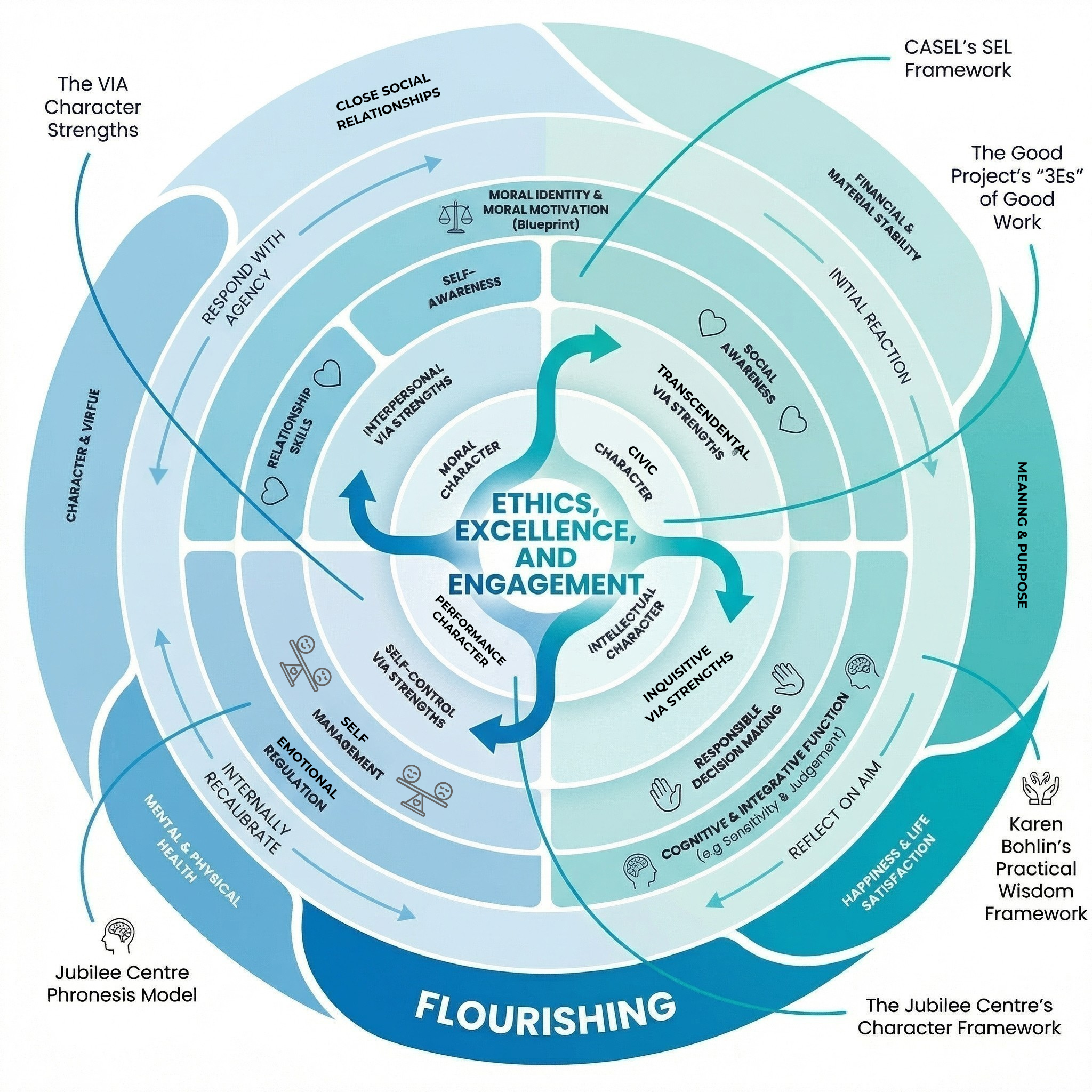
My response was to explore with the students how to connect values and actions. What does it mean to engage? How do our values help us make ethical decisions? We used one C.L.A.S.S. session to explore how others pursued good work, and students overcame their uncertainties. We went back to the shelter and put our individually-stated goals into action. What I saw was transformation. Coats were off, names learned, games played, and crafts made. More so, plans were initiated by the students for our future meetings.

CLASSstudents-580x326.jpg

During the winter months, we joined in with the rest of our community to raise funds for the shelter by participating in Empty Bowls, a grassroots effort that raises both money and awareness in the fight to end hunger. Students also worked to bring to fruition their desire to once again serve dinner at the shelter. They raised funds for the ingredients, contacted local businesses for donations, and organized work teams for cooking and making decorations. Because our Little Free Library was in need of books, requests were sent out for donations. (Little Free Library is a book exchange project that inspires a love of reading, builds community, and sparks creativity by fostering literacy with free books. C.L.A.S.S. sponsors and maintains two libraries in our community.) By lending our support for these community programs, more and more the students took charge of their work.

The Family Dinner

I had concerns about returning to the shelter to serve dinner. Would we “serve” and the shelter residents “eat” as had been done in the past? Learning needed to accompany our serving. Sitting down to eat together is an intimate and vulnerable act. If we really valued the relationship we had developed with the residents, it was necessary that we take a risk and open not just our minds but also our hearts to the people at the shelter.

CLASSstudents2-580x326.jpg

I turned to The Family Dinner Project for inspiration. Before heading into the kitchen, students shared their own meal-time experiences and worked together to study the research around the benefits of eating dinner together. They learned and reported back to each other about the effects of sharing a meal on our social and emotional well-being. We considered the implications that these facts might have for our friends living in the shelter and made a commitment to ourselves and each other to create a family-centered meal. This meal was different from the previous year; students stepped out of their comfort zone, sat down, and ate and talked with the families. The day ended with laughter, Snap-chat exchanges, baby smiles, hugs, and full bellies.

CLASSstudents3-580x326.jpg

Our final meetings for this school year will bring us full circle as we look back on our Concentric Circles of Responsibility, reflect on our own development, and make plans for next year. It is my hope that the C.L.A.S.S. experiences will have expanded these rings and created children with a better understanding of how to live lives based on values, reflection, and good work that builds character. There are many difficulties that face us in this world, but the skills C.L.A.S.S. students learn and practice help them to address these difficulties with open minds and hearts.
Commenting on “Why Philanthropy Is Not a Profession?”

My recent column “Why Philanthropy Is Not a Profession,” published by The Chronicle of Philanthropy, elicited a number of very helpful comments, clarifications and critiques.

In this brief response, I’ve found it illuminating to take into account historical, organizational and career considerations of the philanthropic sector.

Historical Considerations

Foundations, the first organized form of philanthropy in the United States, have existed for something over a century. When first launched, the foundations associated with John D. Rockefeller, Andrew Carnegie, and Henry Ford foregrounded the particular agendas of each wealthy philanthropist—either exercised directly or through executives whose assignment was to carry out the will of the philanthropist. With the passing of the original generation, foundations became far more bureaucratic; and they often deviated quite significantly from the ethos of the founder. Also, of significance, many of the foundations deliberately kept low public profiles: they wanted to support “good work” but not necessarily to have their names, or the names of their executives, strewn across the newspaper.

Times change. In some ways, the present era seems a throwback to the founding generation. Individuals of enormous wealth launch foundations (or comparable vehicles, over which they can exert even more control); they often have a clear agenda that they would like to pursue; and they take more of a hands-on approach than did the founding generation. Across the sector, favorable publicity is sought for both the foundation and its leaders—many employ public relations specialists. Worth noting, there are also far more philanthropies of significant size emerging in other countries, with each country having its own legislative purview and distinctions. Perhaps the biggest difference from earlier eras is the trend toward “sunsetting.” Many wealthy individuals plan deliberately for their foundations to close shortly after their own death.

It’s much too early to know whether these trends will continue, reverse, or move in yet other directions.

Organizational Considerations

My original column failed to distinguish adequately among three different roles: 1) the original philanthropist, the person or family whose assets fund the dispersing entity; 2) the executive of the foundation, who has a great deal of power and latitude, as long as the founder and /or his family are not on the scene and as long as the executive has the support of the board; 3) program officers (whom I called “philanthropoids”), who solicit and judge applications, typically have personal contacts with recipients, and are answerable to the executive and the board.

Both the original funder and the chief of the organization are public figures; they have the advantage and assume the burden of being in the public eye. As one foundation executive wrote, they have an amazing set of tools available, if they choose to use them, and at least until now, very little public scrutiny or second-guessing of their decisions.

In contrast, the philanthropoids are typically not known to the outside world. And within the world of funding, they are hard-pressed to get honest feedback on what and how they are doing. One shrewd foundation executive put it this way: “They are always in the never-never land of aspiring grantees who treat them with exaggerated respect and admiration, while their immediate superior in the philanthropic organization is often hesitant to be the only one who offers criticism of their performance.”

In a paper published a decade ago, Laura Horn and I described these philanthropoids as members of “a lonely profession”: while they are seen by grantseekers as powerful and worthy of deference, they typically do not know where they stand—what they have done well, and where they have made mistakes. And once they leave the funding agency, they are unlikely to be remembered fondly by the numerous individuals whom they have not funded… and fortunate if their former grantees send them an annual holiday greeting.

Career Trajectory

Unlike other vocations, the career trajectory for those in philanthropy is unclear and perhaps unknowable in advance. Leaders of philanthropic organizations rarely come from within that particular organization or indeed from other foundations (Susan Beresford of Ford is a well-known exception); typically, in the past, they came from academe, often former college presidents, and perhaps in the future, they are more likely to come from the ranks of higher corporate management. Until now, presidency of a foundation is likely to be the individual’s last job; only rarely does the former leader of a foundation take a major job elsewhere, and almost never at another foundation.

In contrast, program officers have far less illustrious pasts—rarely are they known outside the particular billet in which they worked. Moreover, as mentioned, because of the nature of their work, they deliberately maintain a low profile. Almost all who study or lead philanthropic organizations believe that program officers should have clear term limits; but for collegial reasons (and in its collegiality, philanthropy has the trappings of a genuine profession), it is difficult to enforce this preference. When, for whatever reason, the time or the term is “up,” there is no obvious next step. Perhaps in this way, more so than any other, philanthropy differs from other aspiring professions—the skills are difficult to define, and what might elsewhere count as an asset (having mastered certain skills) does not readily translate into an upward career trajectory, either within the present place of employment or at another philanthropic organization. It’s rarely desirable to “have been” a philanthropoid.

Now, of course, all of this could change. In a critical comment on my column, one writer enthusiastically described the professional training that she tries to give to program officers at foundations. I have no doubt that one can be helped to be a better philanthropoid. And perhaps in a changing landscape, more individuals who have worked in one philanthropy will transition to another philanthropic organization, perhaps even at a higher rank. But unless one can confidently answer the question “And what will your next job be?”, the career trajectory of philanthropoids will differ from trajectories associated with the traditional professions.

Closing Comment

As for my basic contrast between two approaches to philanthropy—“accountability” and “taste”— commentators acknowledged its usefulness. Sara Lawrence-Lightfoot wrote that her goal as a board chair has been to “bring together artistic value laden approaches and evidence based procedures.” Instead of worrying whether philanthropy is a profession, she declares “what matters is that we engage(d) in good works.” Foundation president Michael McPherson comments, “I’ve come to think that the role is part ‘curation’ and part something like strategic philanthropy. Thus, our fellowship programs are goal oriented and their effectiveness can be measured in ways that make sense. It would be very hard to apply that kind of frame to our field-initiated programs, where curation is a better model.” But Stanley Katz, a leading scholar of philanthropy, is not sanguine. He laments that for many leaders of the sector, “philanthropy is simply the business of giving, and … good works can be objectively and systematically evaluated in the same manner as the production of widgets. The objection that you report yourself making is one that fewer and fewer in the field would understand these days. It is a tremendous concern, especially with so few making so many decisions about such tremendous sums of money.”

In my view, if the price of gaining professional status is the embracing of a strict “business accountability” stance, it is a price that is not worth paying. Philanthropy is one of the few remaining fields where one can use human judgement and taste and where one does not need either to raise money or to follow strict legal guidelines. Rather than cutting off one of its limbs, I’d prefer if philanthropy were to help other sectors generate a broader vision of the means at their disposal.

My profound thanks to Michael Bohnen, Angela Covert, Patricia Graham, Stanley Katz, Raquel Marti, Michael McPherson, Sara Lawrence-Lightfoot and Lee Shulman for their thoughtful comments and suggestions.

Reference

Gardner, H. and Horn, L. (2006). The lonely profession. In W. Damon and S. Verducci (eds.). Taking philanthropy seriously. Bloomington, IN: Indiana University Press, pp. 77-93.

The Professions in America a Century Ago: Views of Louis Brandeis

Although this blog was launched because of my concerns about the “future” of the professions, it’s always useful to have a historical perspective. A few weeks ago, I reported my surprise that, five centuries ago, the French essayist Michel de Montaigne characterized the professions of his day in ways that are readily recognizable to our contemporary minds. Now I’d like to consider views and insights put forth a century ago by lawyer Louis Brandeis. These views highlight the ways in which today’s professional landscape resembles and differs from that in the early 20th century.

Louis Dembitz Brandeis is one of the great success stories of American history. The child of immigrants, raised in Louisville, Kentucky, in modest circumstances, Brandeis was an outstanding student at the Harvard Law School—receiving the highest grades ever achieved. He went on to become a highly successful attorney in Boston; and once he had established his own professional standing—often serving as attorney to wealthy businesspersons—he became a strong advocate for the rights of the less wealthy and less powerful. Indeed his decidedly progressive politics were a factor in President Woodrow Wilson’s decision to nominate Brandeis to the Supreme Court in 1916. Partly because of his political leanings and partly because he was the first Jewish person nominated to the Court, Brandeis’ confirmation hearings were unusually contentious. Brandeis went on to serve with distinction on the Court for over twenty years. He has now been honored in a variety of institutions—perhaps notably as the “patron saint” for the University in suburban Boston that bears his name.

As a student of legal history, Brandeis noted that the law held an especially important place in the United States. Not only was the United States heir to the English tradition of a government based on laws and not on men, with a long history of precedents and decisions on which to draw; but because the U.S. did not have a nobility or a rigid class system, and did have a written Constitution, lawyers were already recognized as especially important figures when Alexis de Toqueville visited the U.S. in the early 1830s. As Brandeis put it, “the lawyer has played so large a part in our political life in that his training fits him especially to grapple with the questions which are presented in a democracy.”

Brandeis went on to describe the traits for which lawyers were valued. Their training sharpened their memories and their reasoning faculties. But unlike pure logicians, the reasoning faculties of legal practitioners were always tested by experiences and invariably geared toward practical ends. Lawyers have to operate in real time—they cannot put off a decision until they have obtained “more data” or had more time to contemplate or consult.

Brandeis went on to describe the traits that were especially important—and especially desirable—for lawyers. They should be judicial in attitude, learn to see issues from various sides, and observe human beings even more keenly than they observe objects. Because of these skills and attitudes, they were best equipped to become advisers—and so naturally gravitated to positions of power and influence in their community and in the government. As he told a group of Harvard students in 1905, “It is as a rule …far more important how men (sic) pursue their occupation than what the occupation is.”

Brandeis came of age at the same time that America was becoming an industrial power on the world scene. Corporations and their leaders were assuming increasingly dominant roles in the society. Indeed, as a leading lawyer on the national scene, Brandeis knew many of these leaders personally, and this experience led Brandeis both to think about the risks to the role of the lawyer, and the opportunities that were afforded.

Having drawn on the insight of de Toqueville, an early visitor to America, Brandeis also cited James Bryce, an English observer who came to the United States in the 1880s and wrote an influential book called The American Commonwealth. Tracing de Toqueville’s own trajectory, Bryce noted, “Sixty years ago there were no great fortunes in America, few large portions, no poverty. Now there is some poverty… and a greater number of gigantic fortunes than in any other country of the world.” (p. 745) He went on to sound a warning: “Lawyers are now to a greater extent than formerly business men, as part of the great organized system of industrial and financial enterprise… And they do not seem to be so much of a distinct professional class.” Brandeis underscored this point: “Able lawyers have, to a large extent, allowed themselves to become adjuncts of great corporations and have neglected the obligation to use their powers for the protection of the people. We hear too much of the ‘corporation lawyer’; and far too little of the ‘people’s lawyer.'”

Brandeis was clearly concerned by this state of affairs. But he also discerned an opportunity—both for business and for the law. As he described it, professions were characterized by three features: 1) the necessary training is intellectual in character, involving knowledge and learning, not just skill; 2) the work is pursued largely for others and not merely for oneself; and 3) amount of financial return is not the accepted measure of success. Brandeis called for a science of management, where the criterion for success is excellence in performance in the broadest sense—for employees, customers, and the broader surrounding community—not simply the making of money. And to make his case in a concrete manner, Brandeis describes an individual (shoe manufacturer William H. McElwain) and a family of merchants (the Filenes) who have “accepted and applied the principles of industrial democracy and of social justice.” Should these attitudes and behaviors become the norm, then “big business” will mean business
“big not in bulk of power, but great in service and grand in manner.”

Brandeis ended his analysis with a message to aspiring lawyers: “The next generation must witness a continuing and ever increasing contest between those who have and those who have not… Nothing can better fit you for taking part in the solution of these problems than the study and preeminently the practice of law.”

As is often the case when one turns to history, the themes put forth by Brandeis over a century ago have a surprisingly contemporary resonance. Our political system is filled with lawyers, but it is partly a revulsion against lawyers that has led to the election of a self-declared successful businessman. Donald Trump is highly dependent on the lawyers who have represented his personal and financial interests and yet he rarely misses an opportunity to castigate the judicial system. My friend Ben Heineman has written a timely and important book The Inside Counsel Revolution in which he describes the crucial position that is currently occupied by the lead lawyer(s) in global corporations.

Business still aspires to become a recognized profession, while the law struggles to retain its professional status. One cannot help wondering what form these discussions will take 600 years after Montaigne penned his insightful essay and 200 years after Brandeis delivered his trenchant and inspiring talks.

Brandeis References:

The Opportunity in the Law, Phillip Brooks House, talk to Harvard Ethical Society, May 1905.
-Brown University Commencement Day, published in System, October 1912 .

Michel de Montaigne: An Unexpected Lens on Professions in the 16th Century and in the 21st Century

While I am student of the professions, I have not studied their history systematically. Of course, I realize that there were educators and physicians in the classical Greek era; the Romans created many pivotal political and military roles, as well as highly skilled practitioners in engineering and architecture (and that’s not to mention what has been wryly dubbed “the oldest profession”). Still, in my “mental model” of the professions, I have conceived of them as a modern phenomenon—distinctly different from medieval guilds and trades—closely tied to the creation of formal educational institutions, legal requirements, ethical codes, and the possibility of losing one’s license.

Stimulated by Sara Bakewell’s remarkable book How to Live: Or a Life of Montaigne in One Question and Twenty Attempts at an Answer, I have been reading through an old translation of the essays of Michel de Montaigne. Montaigne lived in France in the 16th century (1533-1592)—a time so different from ours. Life was short and dangerous, most children did not survive the first days or years of life, war was constant, and cruelty towards enemies was accepted and even encouraged. Royalty had tremendous power but was also vulnerable to upheavals, typically sudden and violent; members of the upper social classes, particularly men, were accustomed to being protected and served around the clock by members of the lower classes. Over the centuries, Montaigne has been widely read and widely cherished (though for two centuries, he was on the Catholic Church index of forbidden books). He wrote about his own life with unprecedented directness, candor and wit. And he did so in scores of short pieces in which he poured out his thoughts in a stream-of-consciousness manner. For that reason, he is considered to have invented the literary form called the essay.

While I was reading the essays and (to be frank) daydreaming, I was quite surprised—and awakened!—to encounter the following passage:

“In reading histories, which is everybody’s subject, I use(d) to consider what kind of men are the authors; if they be persons that profess (NOTE THE WORD!) nothing but mere letters, I, in and from them, principally observe and learn style and language; if physicians, I then rather incline to credit what they report of the temperature of the air, of the health and complexions of princes, of wounds and diseases; if lawyers, we are from them to take notice of the controversies of right and wrong, the establishment of laws and civil government, and the like; if divines, the affairs of the Church, ecclesiastical censures, marriages and dispensations; if courtiers, manners and ceremonies; if soldiers, the things that properly belong to their trade, and principally, the accounts of the actions and enterprises wherein they were personally engaged; if ambassadors, we are to observe negotiations, intelligences, and practices, and the manner how they are to be carried on” (p. 13-14, Essays of Montaigne, Xist Classics).

The wording of the era may seem exotic, but the list of the professions, and what Montaigne expected to obtain from their respective practitioners, is quite familiar—lawyers dealing with controversies in the law, physicians focused on wounds, diseases, and general health. In a subsequent moment of day dreaming, my thoughts leapt to a ceremony—dating back almost to Montaigne’s time—that I witness each year. I refer to the Commencement (graduation) ceremonies held in late spring in Harvard Yard. The President, and other leaders of the University, confer degrees on individuals from a dozen different faculties, and in each case, note the privileges and obligations attendant to those who will practice those respective professions. And the list is quite like Montaigne’s—scholars (Arts and Sciences); physicians (Medical School); lawyers (Law School); religious leaders (Divinity School); ambassadors (School of Government).

Taking off from Montaigne’s musings, if we were to undertake a schematic analysis of the sweep of the professions over five centuries, what might some of the similarities and differences be? Here’s my stab:

Similarities:

-Professions address fundamental human needs—tending to sickness, resolving disputes, educating the young, protecting citizens from harm.

-Often, professions tackle complex issues that are not readily resolved.

-Professions take advantage of the latest knowledge and lore; sometimes this is kept under wraps (privileged knowledge).

-Certain individuals are recognized as practitioners, and perhaps masters of that lore; others are made fun of (e.g. in the plays of Molière or Shakespeare—“Let’s kill all the lawyers” [Henry VI, Part 2]).

-Apprentices seek to identity and learn from masters of the specified professions.

Differences:

-New professions arise, others fade away. Barbers are no longer seen as professionals; journalists are aspiring professionals; going forward, those who design the “rules of the internet” are likely to be considered professionals.

-There are now formal educational institutions and requirements. In the United States, following the publication and dissemination of the Flexner Report (1910), fly-by-night medical training institutions were phased out, and a far more rigorous set of criteria applied to institutions that could award medical degrees (such highly regulated institutions are less the rule in some other countries, and that’s why students who are not admitted to medical school in the U.S. often acquire degrees in other nations). Relatedly, medical curricula are now scrutinized (for example, by the Association of American Medical Colleges.

-Numerous ethical codes that are published; to take one profession, physicians are expected to adhere to them and, at least in principle, one can lose one’s medical license (even if in practice, physicians are rarely expelled from the profession unless they are convicted of crimes).

Taking a perspective that stretches back to Montaigne’s time, while also looking ahead, what trends might we expect?

In the traditional professions (e.g. law, medicine, engineering, university teaching), there will be continuing efforts to establish and monitor training and to maintain and even increase the status of these professions. I don’t think that these efforts will be successful. So many occupations strive to have the status of professions; various educational interventions, many disreputable, are once again springing up. Expertise is not held in high regard (unless your own health or well-being is at stake). Unless the traditional professions can demonstrate unequivocally that their graduates can perform in a way that others do not, it’ll be difficult to maintain the hallowed status of, say, a degree from a flagship law school.

Also, there will continue to be a proliferation of paraprofessionals, who carry out more specific tasks, and these often well-trained experts are likely to blur further the line between the traditional professional and her close colleagues. Finally, as more tasks traditionally associated with the professions are carried out by computational algorithms and devices, the unique contribution of “the professional” will be more difficult to discern.

As readers of this blog will know, I am not sanguine about these trends—I continue to hope that the special status of the professional will endure. If it is to endure, I think it will have less to do with technical knowledge and years of schooling of the professional. Rather the survival of “the professional” will come to be associated with the way she comports herself—in terms of relations to colleagues and clients, ability to communicate effectively, monitoring of relevant trends (positive and troubling) in the broader society, and, most important, being able to give clear, objective, and disinterested advice, knowledgeable syntheses of what is known and what is unclear, and wise recommendations within her sphere of competence.

Interestingly, these desirable human traits go way back in history—even in pre-history. We can see them in Plato’s descriptions of wise rulers and in the Biblical portrayal of judges. By implication, we can also see them in Restoration comedies—when professionals are ridiculed, it is because they do not live up to the expectation of excellence that we hope for. And they are also discernable, in a positive sense, in Montaigne’s writings.

In the best of both worlds, we will continue to have individuals who possess high levels of knowledge as well as acute judgment and shafts of wisdom, and who merit the comment, “She is a true professional.”

Care (“meléte”) and Virtue (“areté”): A “Melarete” Project for Children in Italy

By Luigina Mortari

Luigina Mortari is the Scientific Director of the Center of Educational and Didactic Research at the University of Verona in Italy. In the post below, she shares details of a curriculum she and her colleagues developed that emphasizes care and virtue.


Melarete.png

Educating to care and educating to virtue—these are the fundamental ideas behind of the Melarete project, a project developed by my colleagues and I in order to encourage virtues in young people, particularly the ethic of care. The word Melarete may sound strange, but if we examine its etymological foundation, we discover its meaning: the union of the Greek terms meléte (care) and areté (virtue).

The main underpinnings of the project are: 1) the ethics of care (Held, 2006; Mortari, 2015; Noddings, 1984, 1992), according to which acting “good” means caring for others; and 2) Aristotelian ethics, according to which it is important to practice virtues to learn them. Melarete is an educative and research-based curriculum designed for primary-school children, based on the epistemological approach of “naturalistic inquiry” (Lincoln & Guba, 1985), which asserts that phenomena must be investigated in the context in which they appear. Our context is the school, where children spend a great deal of time, build significant relationships, and are involved in learning experiences.

Our project is further defined as follows:

  • “educative research” (Mortari, 2009), because it offers children educative experiences as the object of the research;

  • “transformative research” (Mortari, 2007, 2009), because it aims to improve the quality of the context in which it is conducted;

  • “research for children” (Mortari, 2009), and not merely “research with children,” because it aims to involve children in positive and meaningful experiences in order to facilitate their flourishing.

The goal of Melarete is to encourage children to reflect on their personal experiences to explore the essential meaning of important ethical concepts, such as good, care, virtue, courage, generosity, respect, and justice. The heuristic goal is to investigate how children’s thinking develops in relation to ethical concepts and potentialities. Adopting a naturalistic epistemology requires searching for research instruments that are as similar as possible to the objects and activities used in the school. Our instruments are therefore similar to those that teachers use for everyday class work.

Currently, this curriculum is being implemented in schools in two cities in Italy. Six primary school fourth-grade classes are participating. Below, we share some examples of our activities, which include stories, games, and vignettes intended to spark conversation and reflection among the students about the general concepts of good, care, and virtue, and on the virtues of courage, generosity, respect, and justice.

  • Reading a story to focus attention on acting with care in order to search for what is good; after the reading, the children are asked if they liked the story and why, and a discussion about the meanings of “good” and “care” occurs.

  • Two introductory activities: a game called “The Basket of Virtues” which helps the children define the specific virtues of courage, generosity, respect, and justice; and a story called “The Story of Alcibiades,” designed to motivate the children to reflect on virtues and how they are learned.

  • Concluding activities, which are designed to determine if and how the children’s thinking has developed due to the project.

Activity Spotlight: The “Diary of Virtues” and “Tree of Virtues”

Trees-580x364.png

One activity, “Diary of Virtues,” is presented after the introduction of these concepts and is carried out by children until the end of the educative path. The children are invited to keep a diary at least once a week in which they narrate a virtuous action they have done or that they have seen other people do. If the children have no virtuous actions to narrate, they can freely write as they please. The topics considered most suitable for the diary are those on which Melarete focuses (i.e. courage, generosity, respect, and justice).

Furthermore, whenever the children do a virtuous action, they attach a leaf to their “Tree of Virtues,” a diagram drawn at the beginning of their diary. The leaves have different colors based on the different virtues they represent (i.e. red for generosity, yellow for courage, blue for respect, and purple for justice).

Whenever the children narrate a virtuous action in their diary and attach the leaf of the relative virtue to the tree in their diary, they also attach another leaf, identical to the first one, to the “Tree of the Trees” that is in the classroom for public display.

I would like to conclude by presenting some examples written by children in their diaries, powerful illustrations of children learning about the meaning of doing “good” in the world:

  • “Yesterday, I saw a courageous person who went into the street to save three doggies.” (courage)

  • “When I was little, one day I was in the mountains and went for a walk. We had to go in a wood, but I didn’t want to. Nevertheless, I then took courage and went in the wood.” (courage)

  • “When I was little, I was afraid of the dark, and then I faced it.” (courage)

  • “I painted the yellow leaf because I told the truth to my mom.” (courage)

  • “The virtue about which I want to tell you is generosity. Today I carried out an act of generosity when I gave a balloon to a child, and I felt good.” (generosity)

  • “Yesterday my brother asked me if I could lend my pencil to him, and I lent him it.” (generosity)

  • “My brother did an act of generosity: he gave a biscuit to his cousin because he was hungry.” (generosity)

  • “I saw a gentlemen giving a pizza to a poor person.” (generosity)

  • “When my brother threw paper on the ground, I picked up it and threw it into the garbage pail.” (respect)

  • “I started to say please and thanks and to ask for permission before doing something.” (respect)

  • “I saw a child in a park who was having a snack with two other friends. This child was eating all of it, but his friend stopped him, and they divided the snack.” (justice)

  • “Yesterday, my brother and I divided our TV time.” (justice)

References

Held, V. (2006). The Ethics of Care. Personal, Political, and Global. Oxford-New York: Oxford University Press.
Lincoln, Y.S. & Guba, E.G. (1985). Naturalistic inquiry. Newbury Park (CA): Sage.
Mortari, L. (2007). Cultura della ricerca e pedagogia. Prospettive epistemologiche. Roma: Carocci.
Mortari, L. (ed.) (2009). La ricerca per i bambini. Milano: Mondadori.
Mortari, L. (2015). Filosofia della cura. Milano: Raffaello Cortina.
Noddings, N. (1984). Caring. A Feminine Approach to Ethics and Moral Education. Berkeley: University of California Press.
Noddings, N. (1992). The Challenge to Care in School. An Alternative Approach to Education. New York: Teachers College Press.